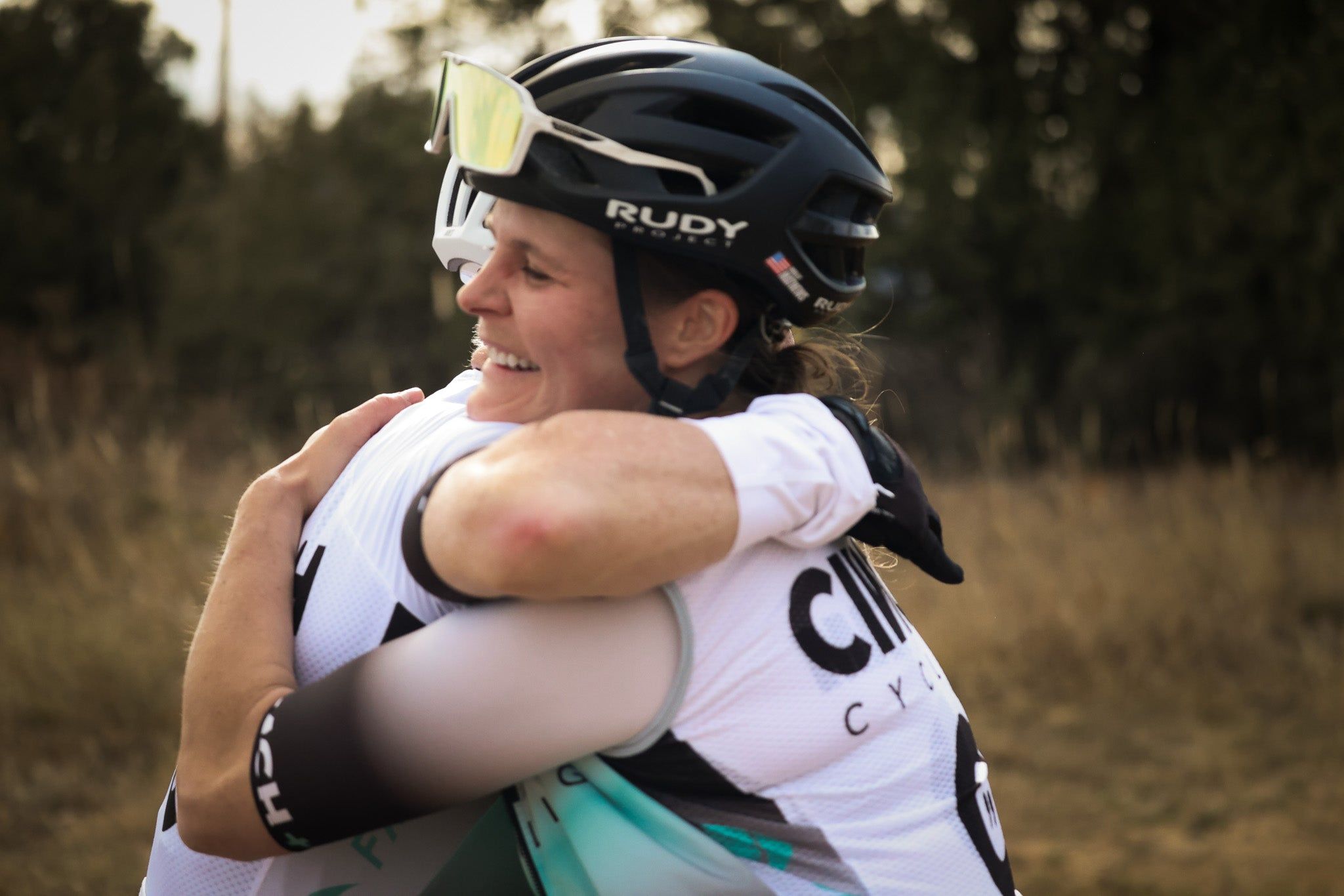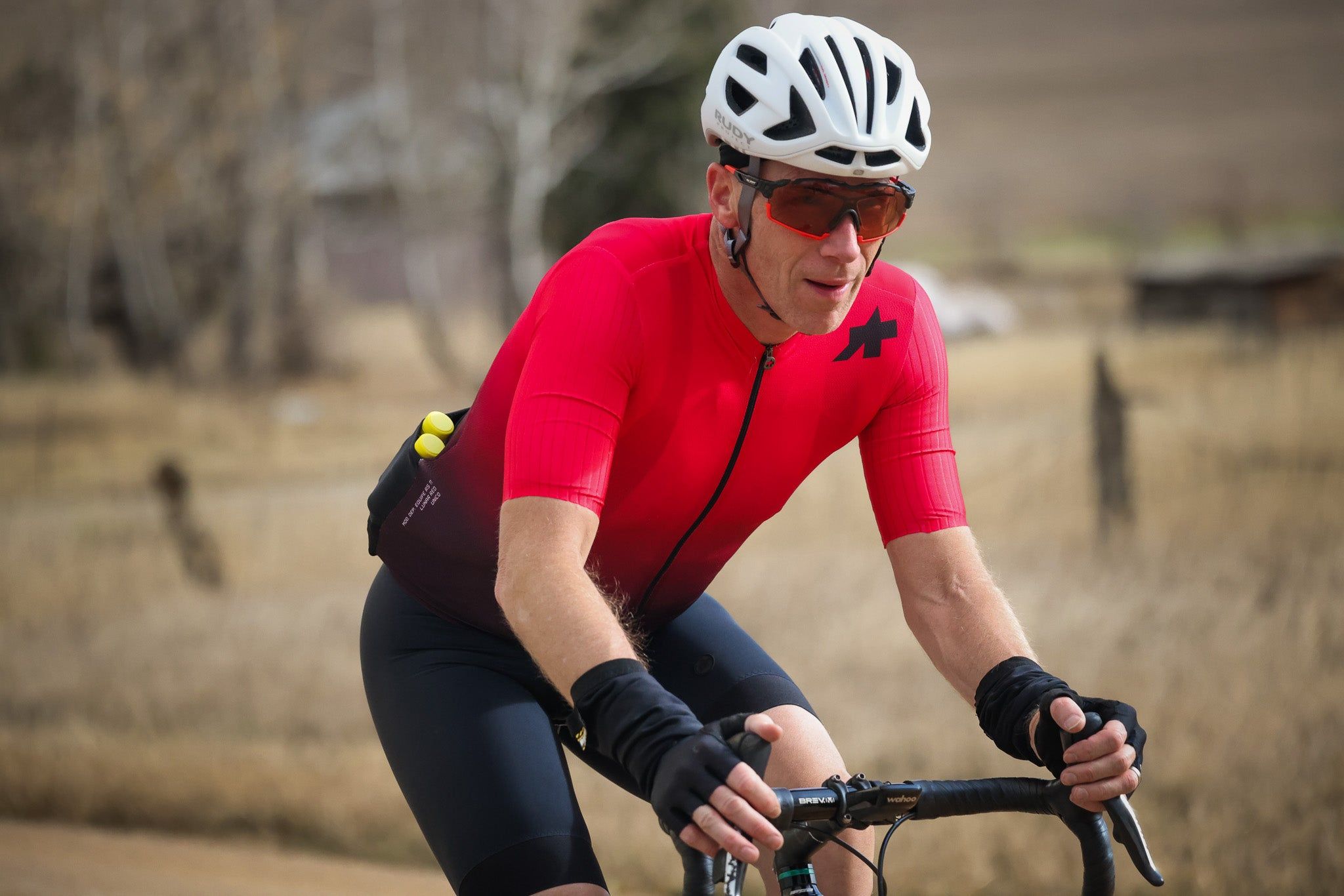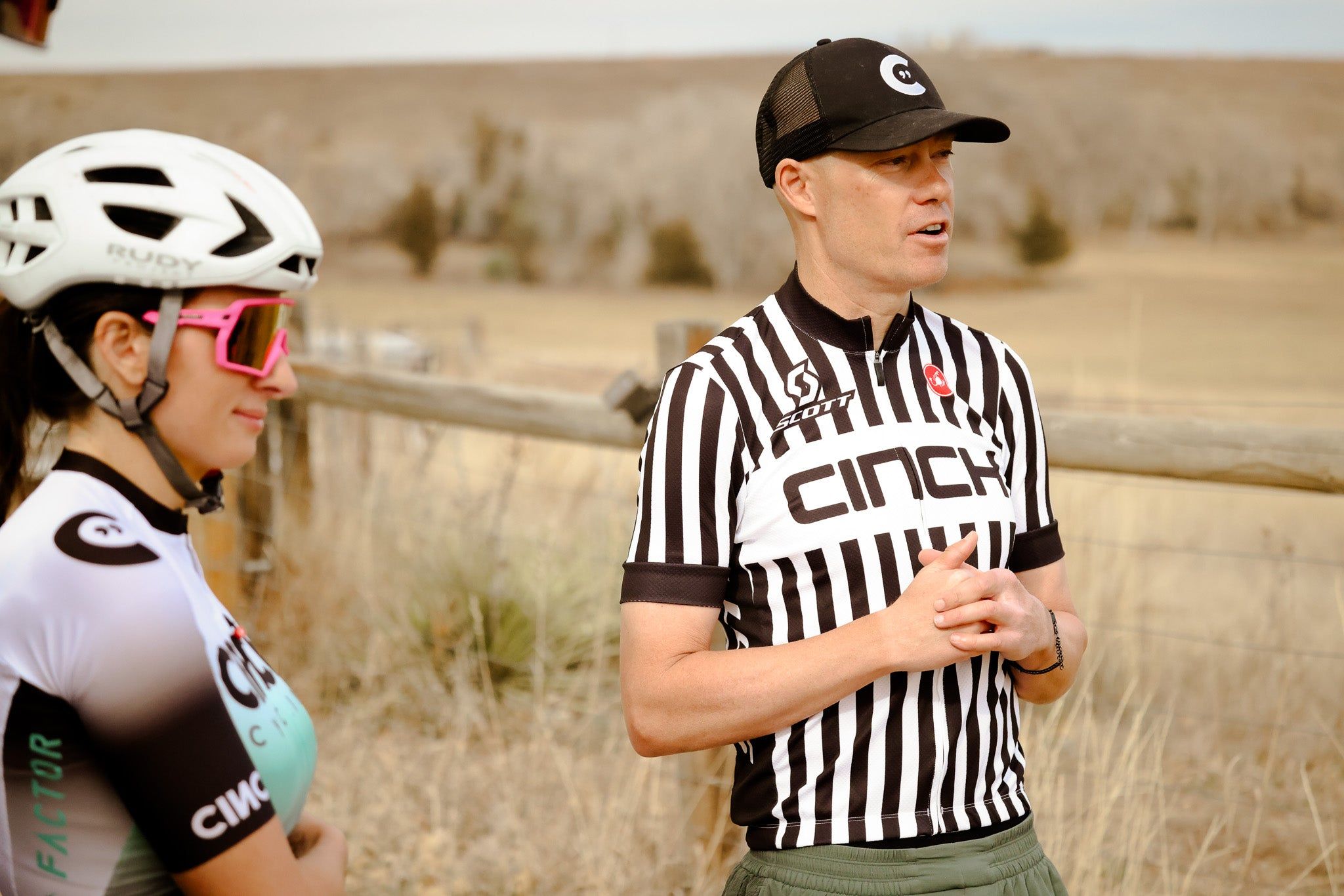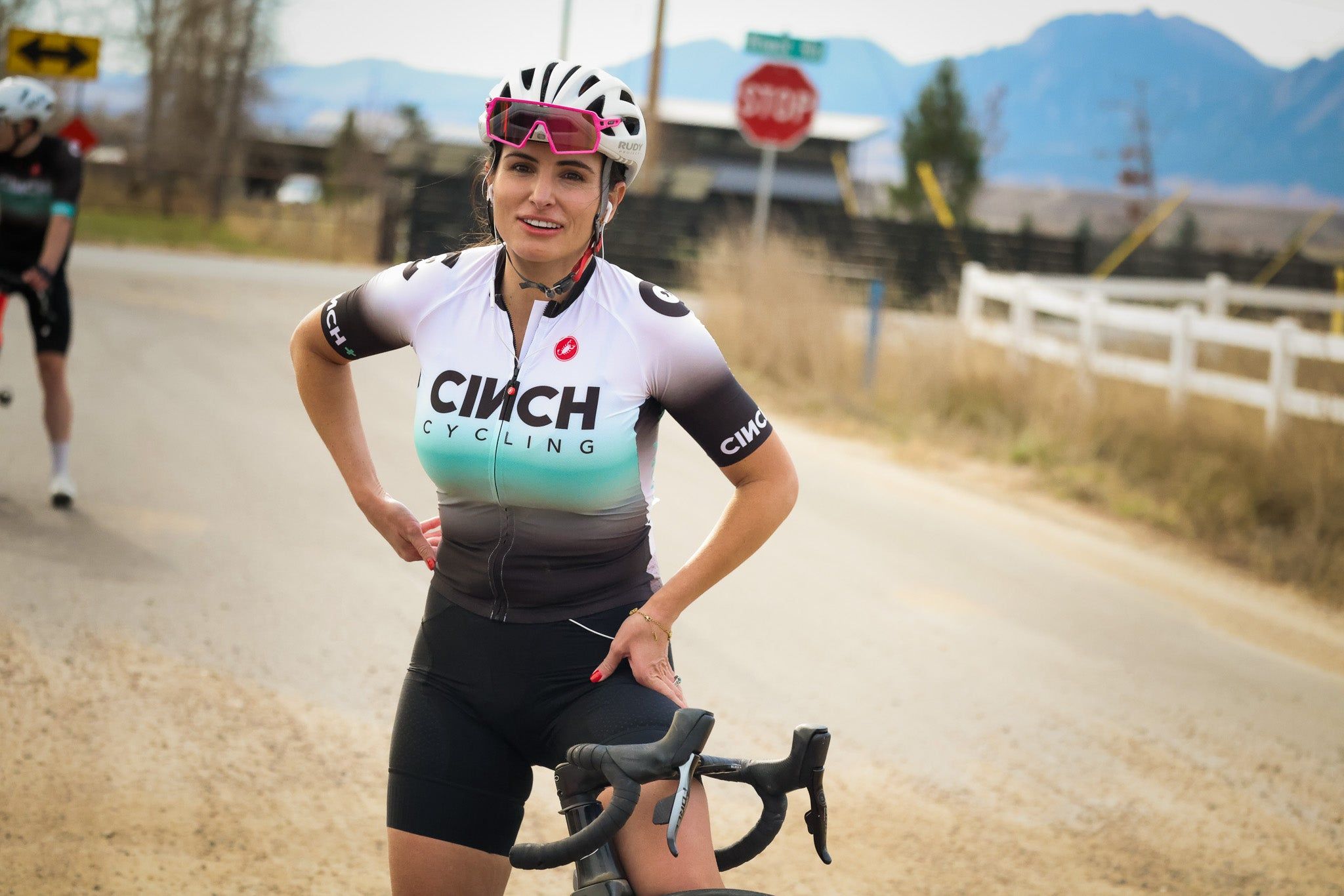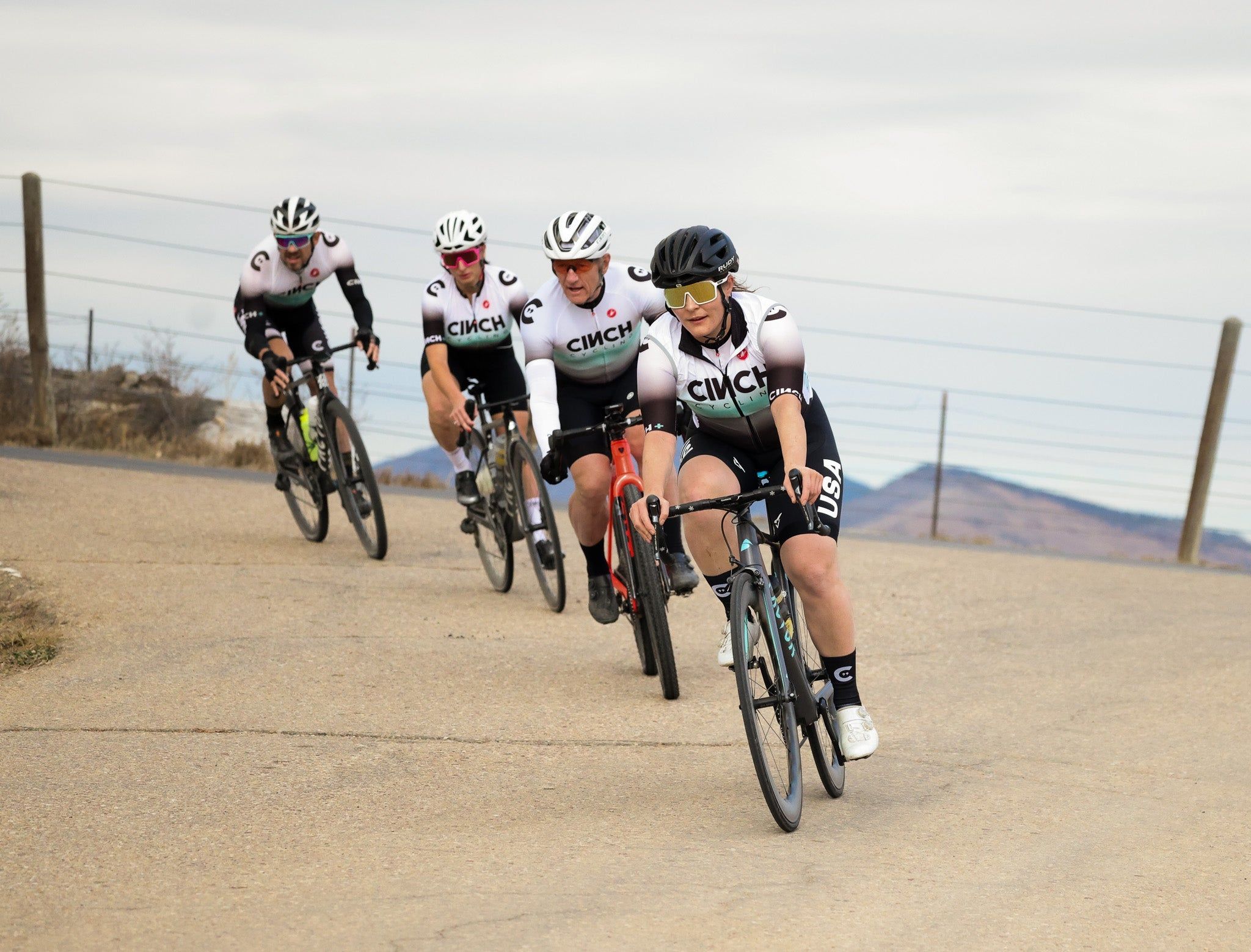
This past Saturday we ran a race simulation with some of our Colorado riders, and I wanted to share a few coaching points that stood out. These are the habits, mistakes, and tactical upgrades that most people don’t even know exist.
Whether you’re preparing for your first local event or trying to level up for bigger goals, these insights will help you become a smarter, smoother, and more complete rider in the group.
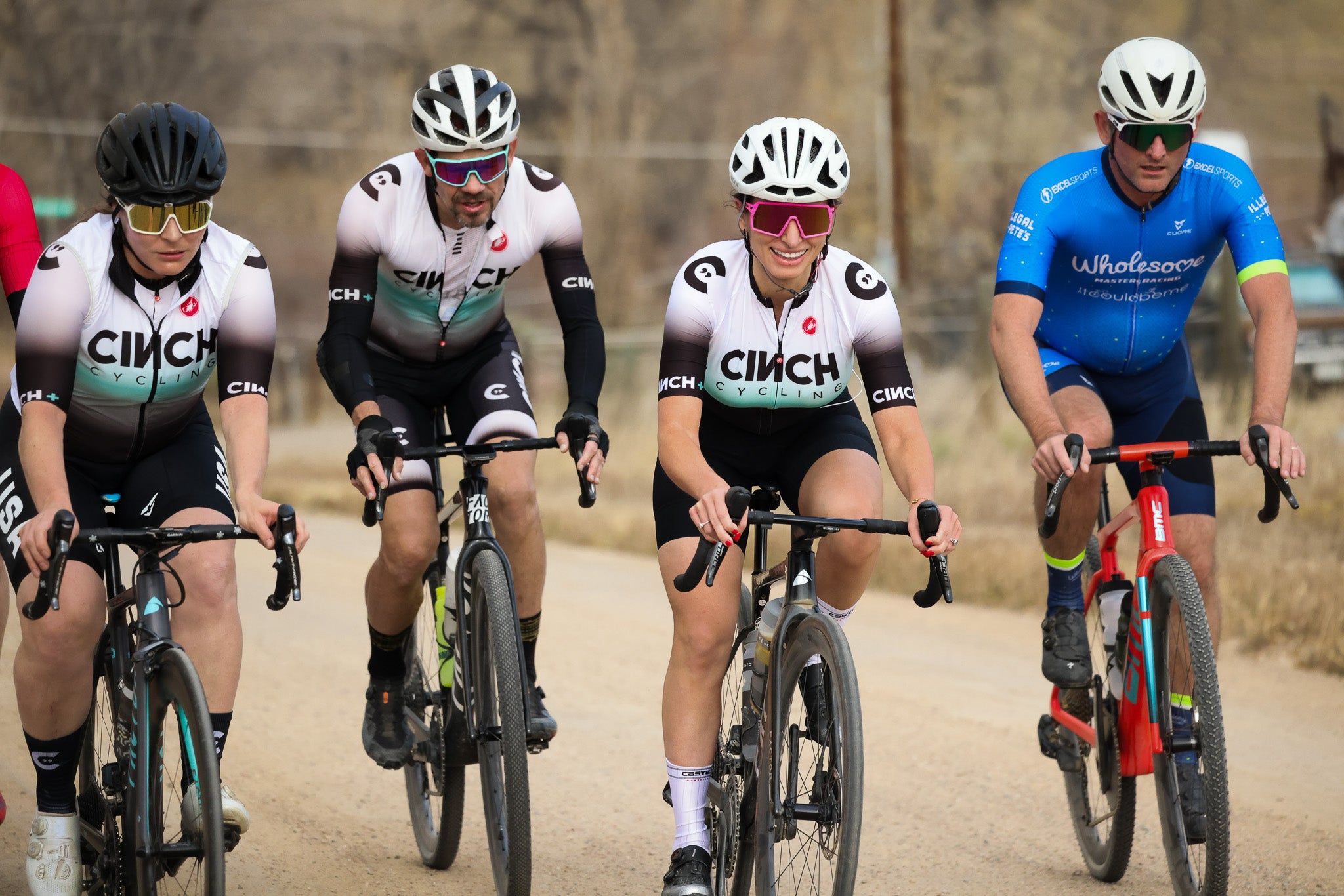
1. Contain Yourself on the Front! Be Aware of Your Excitement and or Fear of Not Being Strong Enough
This one sounds simple, but it’s probably the most common mistake in any paceline.
When it’s your turn to pull, the adrenaline hits. You want to show you’re strong. You want to “do your part.” And before you know it, boom, you’re 20 watts over your threshold, torching matches you’ll want later.
Here’s the rule:
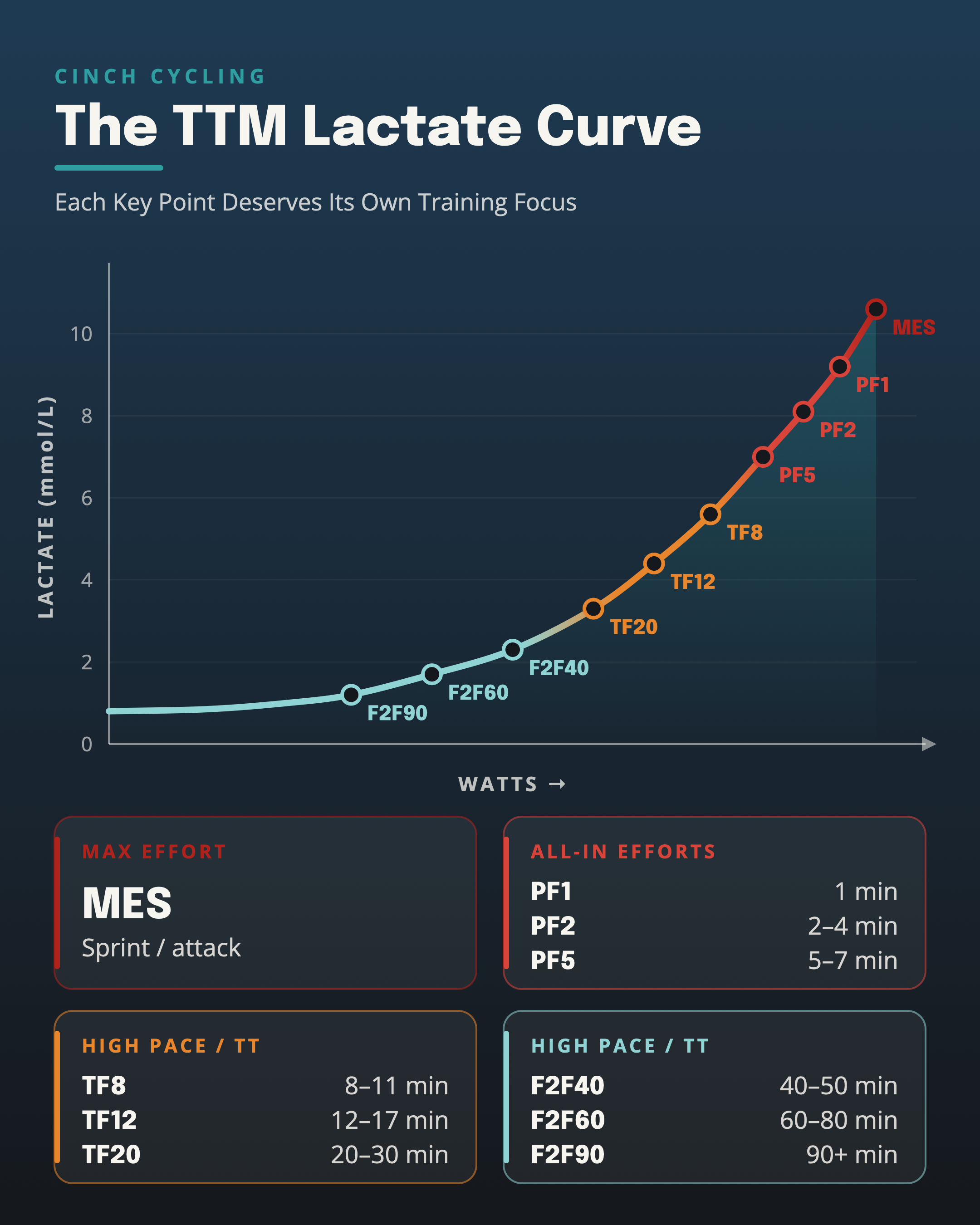
Pull at or below the lower end of your threshold power (CINCH Low Threshold Zone) That’s it.
Why?
- You’ll have enough left to jump back onto the wheel when you rotate off.
- You won’t get “pegged” by someone else’s surge when you’re already in the red.
- You keep the pace smooth for the whole group.
If your threshold is lower relative to the group, take a short pull. We call this the “up and off”: Hold the same speed for 5–10 seconds, then rotate off before you fade and drop the pace. Short, smooth, predictable, that’s perfect pulling.
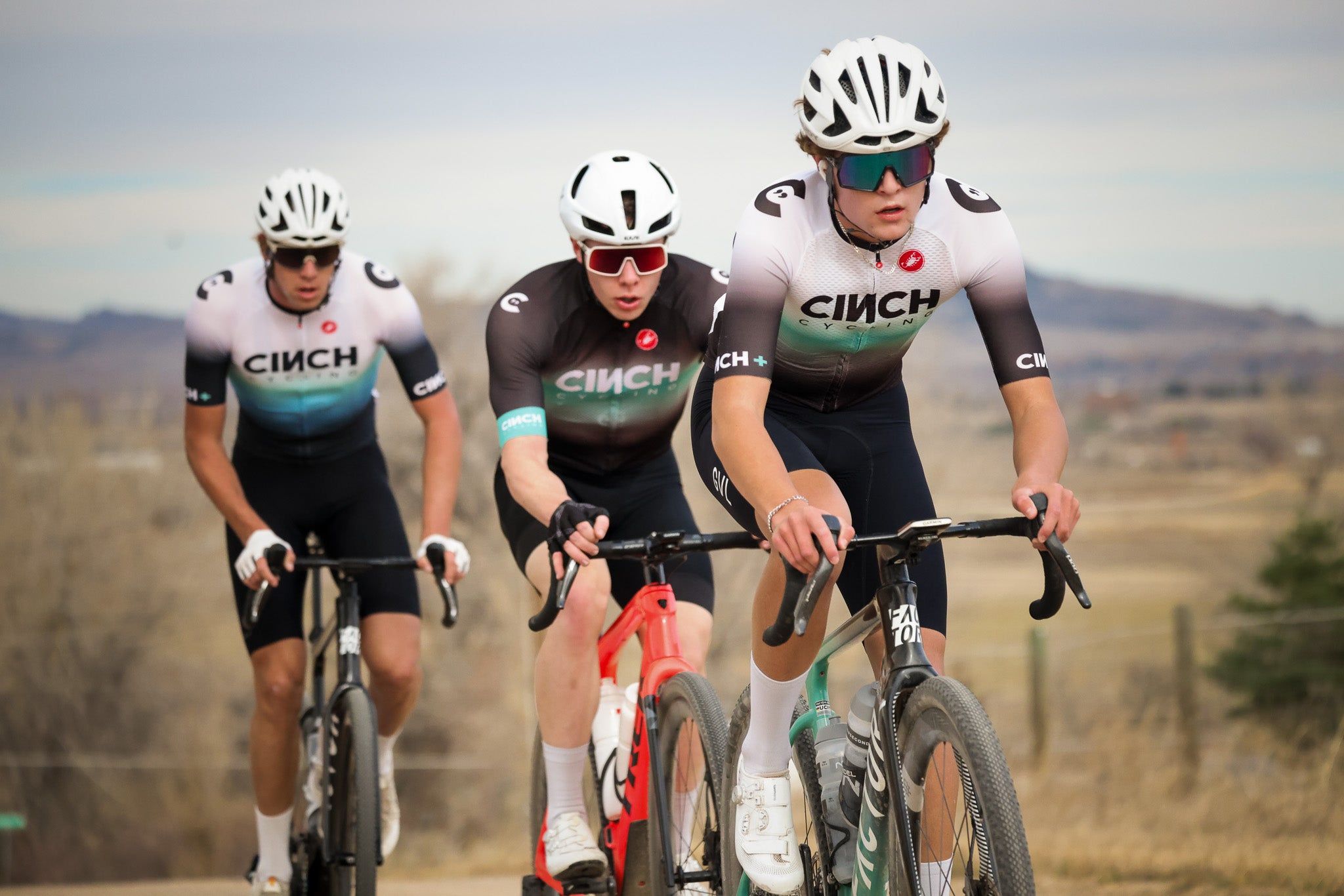
2. Rotate & Don’t Waste Time on the Front
Good rotation starts with awareness: Where is the wind coming from? You always pull off into the wind.
Then communicate clearly.
Flick your elbow on the side where you want the rider behind you to come through.
After that:
- Move diagonally forward into the wind.
- Ease your pedaling slightly (don’t stop).
- Let the next rider pass without forcing them to accelerate past you.
This keeps the effort even for everyone and prevents you from wasting energy sitting in the wind longer than necessary.
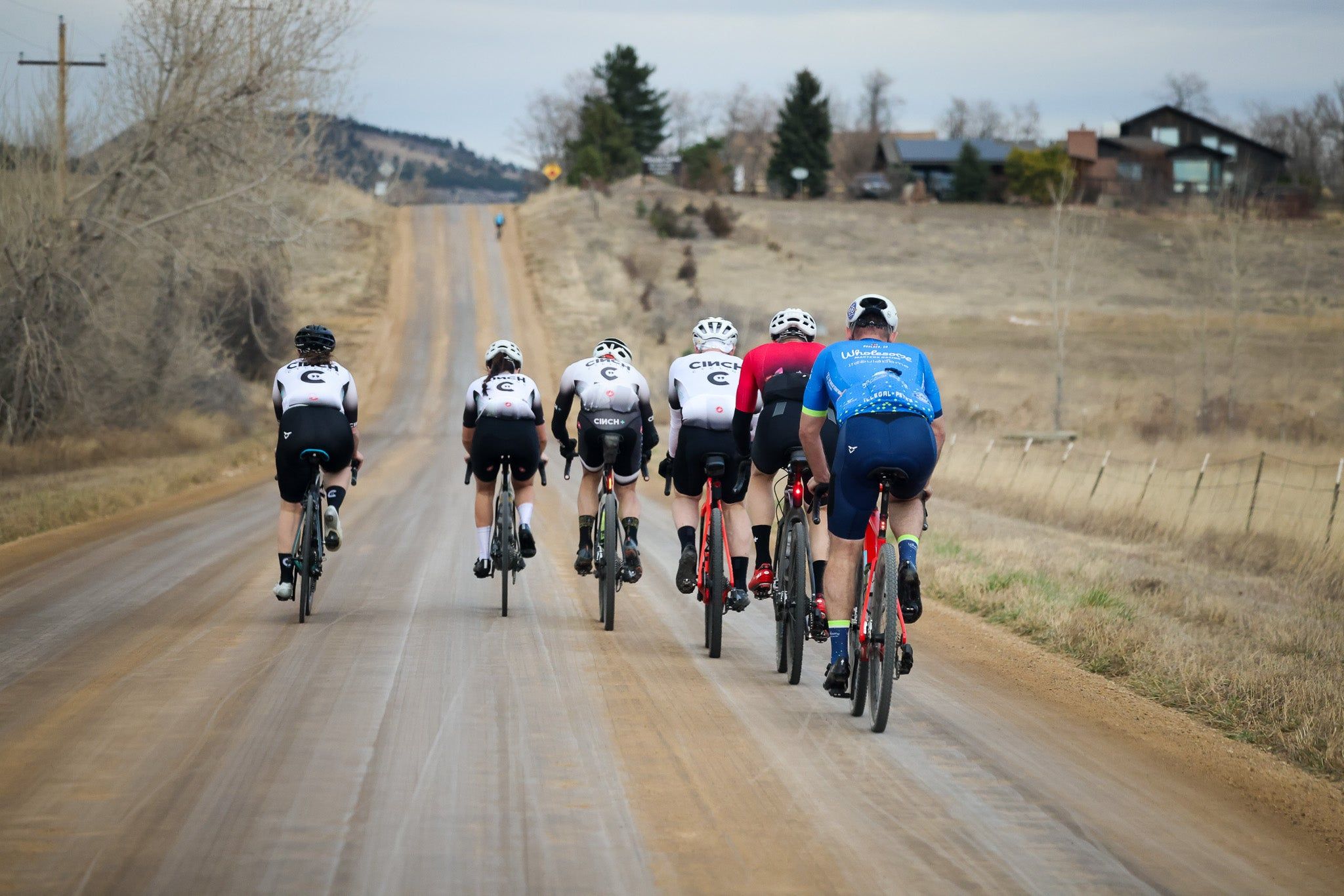
3. On the Hills, Ride the Pace of the Weakest Rider
Hills are where group discipline falls apart, because riders let fear & ego take over.
If you are unsure what pace to pull up theclimb and you’re on the front approaching a climb, pull off before the hill. If you find yourself leading up the hill anyway, ride as easy as possible.
If someone surges around you, that’s totally fine, slot in and stick to your pacing plan.
The biggest mistake riders make is blasting the hills without the intent of attacking:
- It drops riders you’ll need on the flats.
- It burns your matches early.
- It usually doesn’t lead to lasting separation, just in-the-moment chaos.
If a rider chooses to surge, let them go. If the group behind stays disciplined with you, they’ll bring the rider back once that big effort fades.
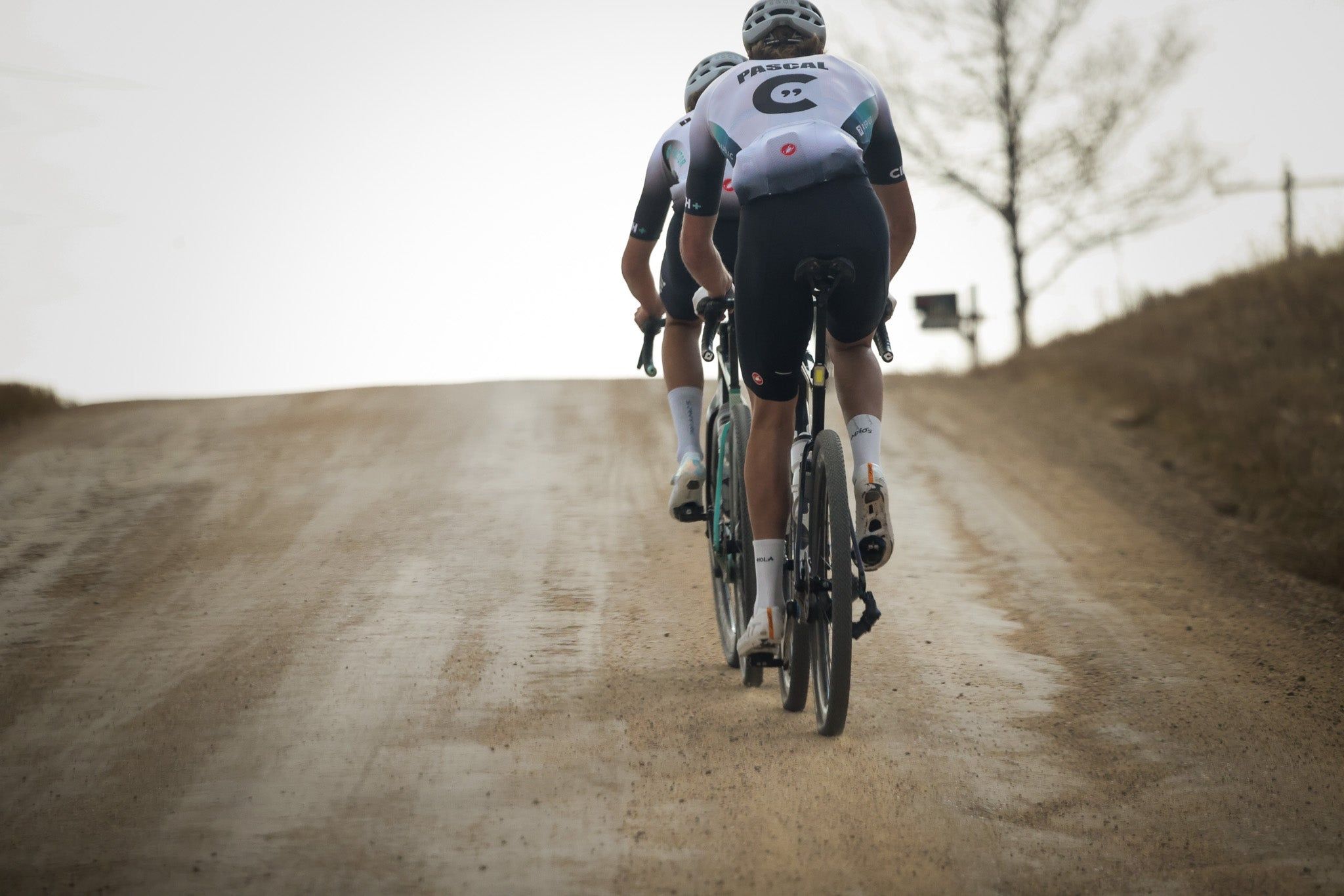
4. If You’re the Strongest Rider, Don’t Show It Too Early
Strength is an asset, but only if you use it at the right time.
The strongest riders often sabotage themselves by:
- Taking monster pulls
- Pulling too long and too hard
- Making all the riders in the paceline afraid of them.
They burn so many matches proving they’re strong that they show up to the finale with nothing left.
If you’re the strongest, do this instead:
- Match the speed and the pull length of the group
- Save your attacks for when the group begins to fade
- Use your strength late, not early
Win with timing, not just watts.
5. Closing Gaps: Act First, Think Later
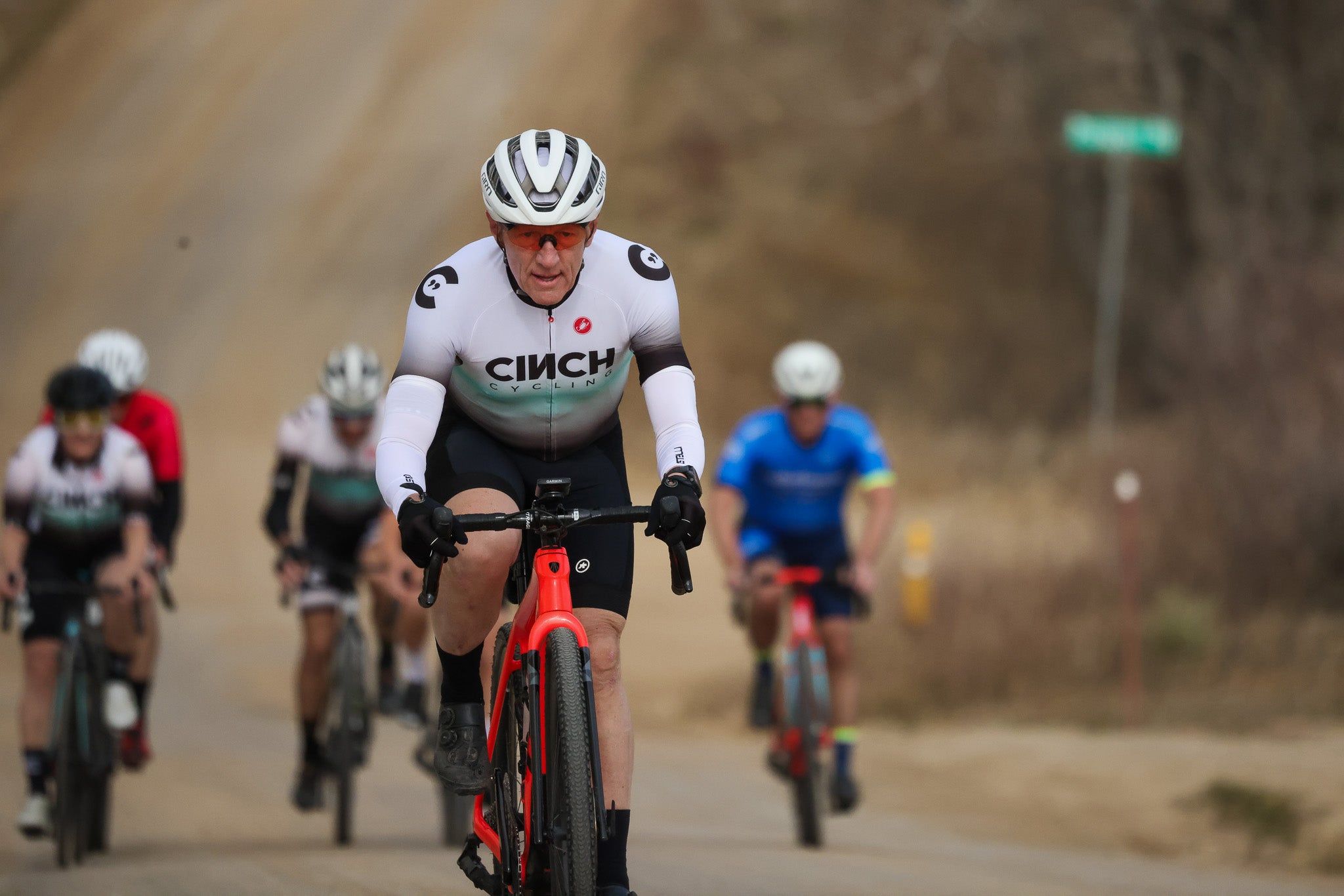
One of the clearest differences between experienced and inexperienced racers is how they respond to a gap opening.
When there’s an attack and you’re separated by 2–3 seconds:
- The experienced rider locks in immediately and goes all-in to close it.
- The inexperienced rider hesitates, immediately assumes they cannot follow, and effectively talks themselves out of making the selection.
By the time they decide to chase, it’s too late. But just like I witnessed in our race sim, when they did chase they did not lose much ground at all. Showing they did have the fitness to follow had they not hesitated.
Gold(en) rule:
When you see a gap, react instantly.
Don’t wait. Don’t think. Just commit.
6. Don’t Draw the Sword Until You’re Ready to Finish the Fight
An attack is a commitment and should not be used to “swat the hornets nest.”
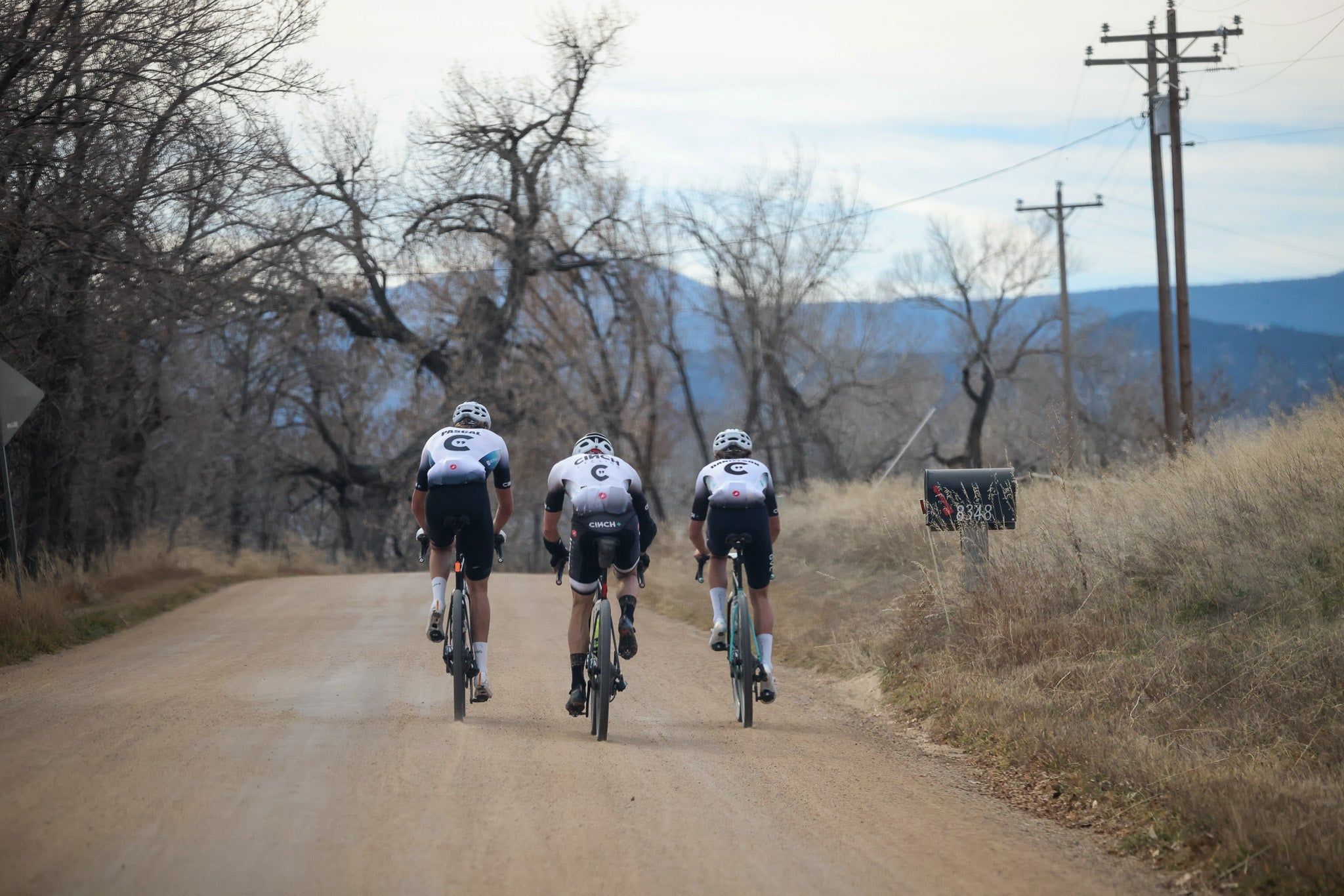
In our simulation, two riders were off the front into the final lap. One attacked hard on a short climb with still far to go before a long descent, hoping to break the elastic. The problem is there was tons of ground to get back had there been separation, but also lots of terrain the rider who was attacked could play defense and sit on, not working.
Well, the move didn’t stick.
Now he had a partner glued to his wheel who was (rightfully) refusing to pull. The pace slowed, the dynamic shifted, and the rider with the better sprint suddenly had the advantage.
Why?
Because the attack came too early, in a spot that didn’t favor separation, and with lots of easy terrain to recover after.
Had he waited for the final three rollers close to the finish, terrain that suits repeated surge, he could’ve attacked with purpose, broken his rival, and carried the move to the line.
Lesson:
Attack when you’re committed to seeing it to the finish. Not before.
7. Winners Adapt, They Don’t Wait for Perfect Conditions
Too many riders think winners have it easy, that everything went right for them.
But winning is rarely simple. It’s messy. You make mistakes. You adjust. Others work against you. You adjust. You don’t feel perfect. You execute anyway.
Our simulation winner proved this perfectly:
With 1 km to go, he launched what he thought was his final attack…
…only to learn there was one more lap left.
Total disaster, right?
Nope. He reset, regrouped, adapted, and found a way to win anyway.
That’s racing.
Your plan should never be:
- “If I feel good...”
Your plan should be:
- “How do I execute my best possible strategy with my abilities today?”
This is how winners truly win.
Final Takeaways
I would love for you all to leave from reading this taking away these key concepts! If you did not, please return to the top and read it until you do!
Learn to:
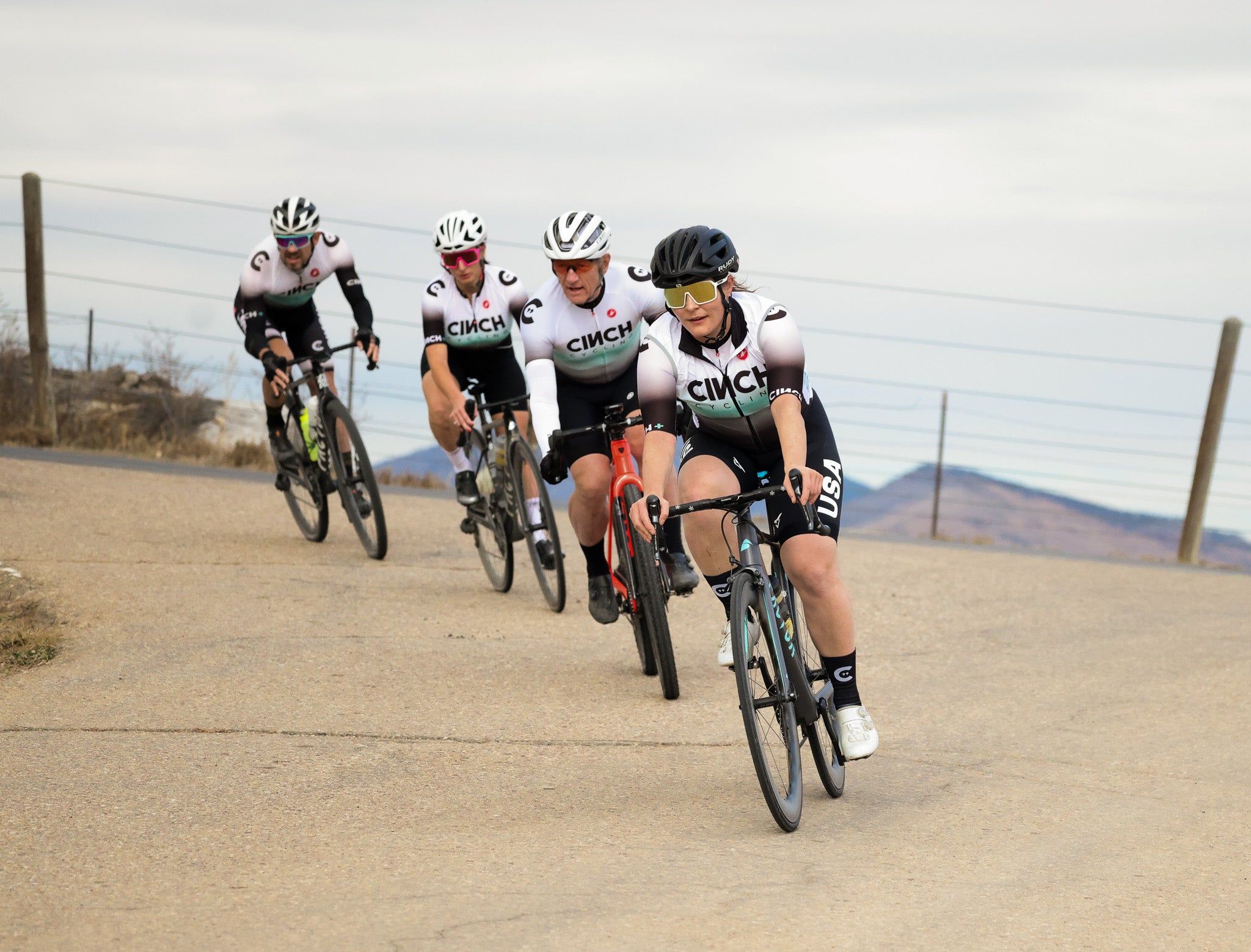
- Pull with intelligence.
- Communicate a lot!
- Pace the terrain to the goal of yours and the groups.
- Hide your strength when you are strong.
- Close gaps immediately no matter how you feel.
- Attack with the intent of going to the end.
- Adapt when things go wrong, no matter what!
Thank you for reading and I hope this helps you level your group riding and racing up to a new level!