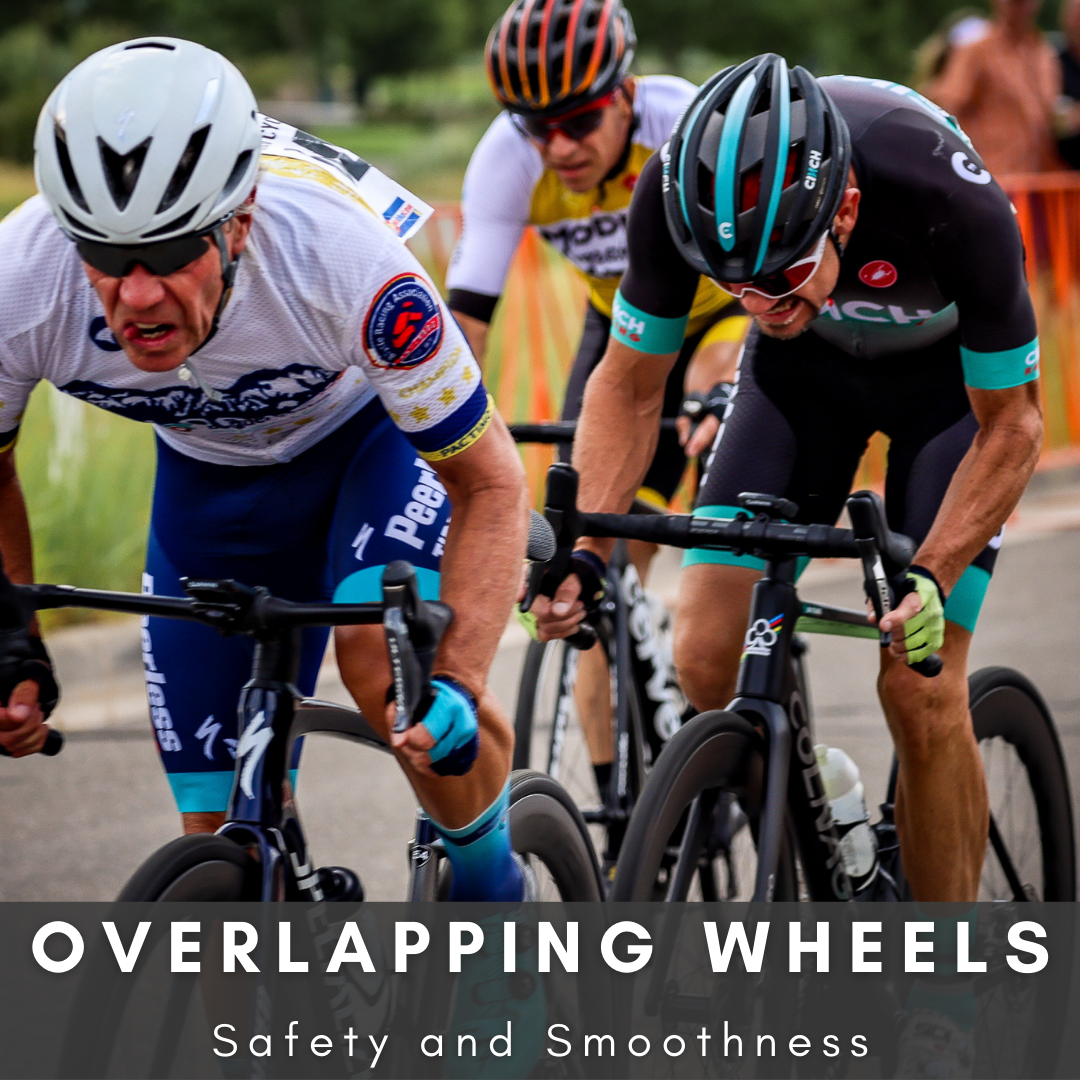
Overlap wheels to make riding behind people smoother and safer.
Wait, what?!?! Yes, to ride smoother and safer in the peloton stop trying to ride directly behind the wheel that is in front of you!
I know everyone told you to not overlap wheels, but here are three reasons how it will improve your group riding.
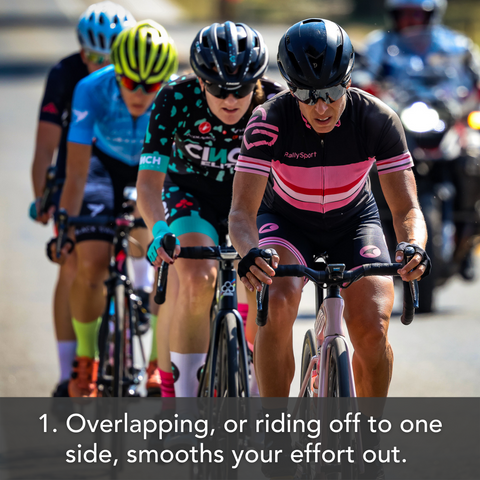
1. It smooths your effort out. If the rider in front of you slows down, you don’t have to hit the brakes.
Just gently use your front brake (while you keep pedaling) to avoid your front wheel completely passing their rear wheel. Then when they accelerate you don’t have to do the same. Just let up on the front break and with little effort, you are at the same speed as them. Jerky and surgy riding will tire you out and make you more likely to cause a crash or run into another riding struggling to catch up.
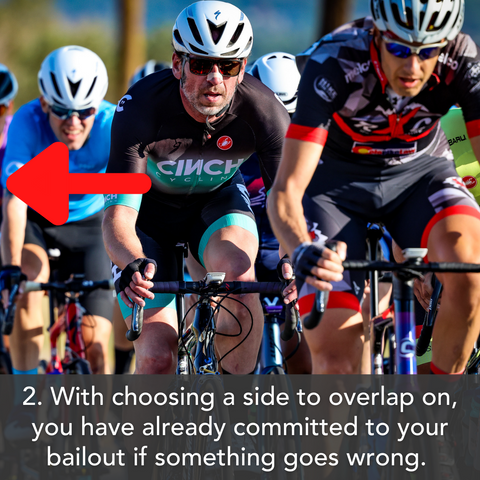
2. You have already chosen your bailout if something goes wrong.
When selecting the side of the rider’s wheel to be on, you must chose the side that is clear to go to if there is a problem. This could be the side of the road where there are no objects, drop offs, or trees. Or this could be the outside of the group after checking to see there are no cars coming or behind. If there is a crash or a sudden stop, you just go to the side you are on which you have already scouted to be safe.
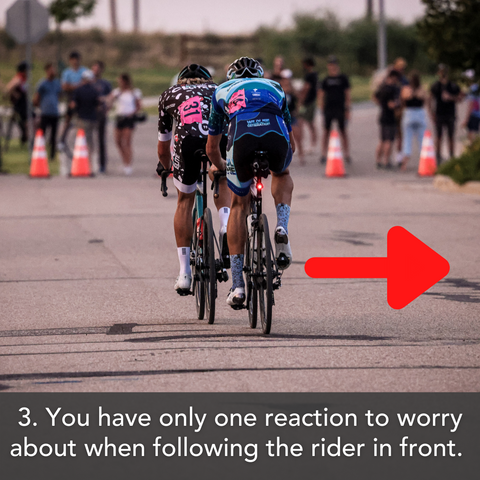
3. You have only one reaction to worry about when following the rider in front.
That’s right, you only have to react if the rider goes to the side your wheel is on. If they slow, no problem. If they speed up, no problem. If they swerve to the opposite side, no problem. This allows you to be ready with one solid reaction if they move towards the ride you are on. This is where much stress comes from in the group as riders are stressed spending too much energy watching the rider in fronts every move. You should be relaxed only worrying about one move.
Finally, it’s ok to switch sides as the road conditions, wind conditions, and riders change. Just avoid going back and forth continuously behind the rider in front of you. This is when it gets dangerous!