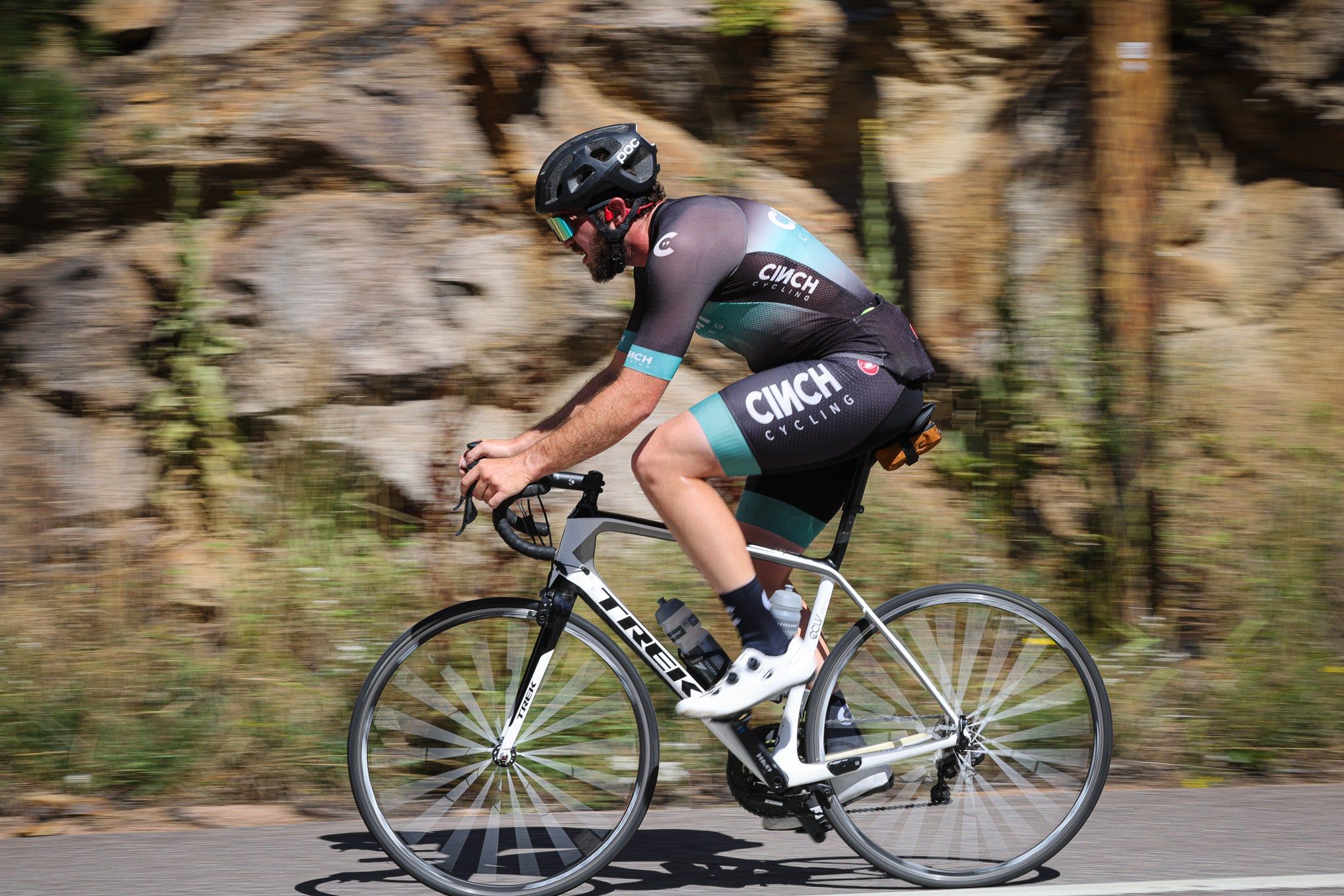

Happy Friday everyone! Hope you all had a great day.
Personally, I went on an awesome three hour ride today with swimmer and Olympic Gold Medalist in the 400 freestyle, George Dicarlo. I connected with George to give him some one-on-one coaching on riding technique and working on climbing.
One of the things I ended up working with him a lot on was how to pace your riding in the wind. Why, well, it was windy today!
The Fall and the transition into Winter can be some of the windiest times to ride so I figure now is a good time to share some of this information with you. Maybe you can even use it on your rides this weekend!

The Wind!
The wind is a huge component in cycling. In fact, we believe it to be the highest level piece to the cycling performance equation.
No matter where you are, it always exists. Flats, climbs, and downhills there is always some sort of wind. Even in the most sheltered areas, there is a breeze that is affecting your riding in some way or another.
So what do you do? How do you ride in each type of wind? For foundational purposes, let’s start with you riding solo.
Which way is the wind coming from?
So let’s begin with how do you find which way the wind is coming from? You listen to your wheels. Yes, this simple, but extremely effective method will work on all scenarios and help you to accurately pinpoint where the wind is coming from.
If you hear the sound of your tires on the pavement or ground, it is a tailwind. If you cannot hear your wheels and tires, instead the sound of the wind is in your ears, it is a headwind. Simple!

How do you ride in a headwind?
The key to a headwind is you treat it like a climb. You want to think about keeping constant pressure on without dropping the pace. Just like a climb, if you drop the pace, it requires large amounts of effort to regain the same pace. This means to avoid surging and focus on a steady effort.
How do you ride in a tailwind?
This one is all about raising the speed. You ride a tailwind much like a downhill, looking for all the places you can raise your speed and then doing the minimum after to hold the speed. So keep surging, raising power and the speed up, and then backing off the power. You will see the wind from behind will hold your speed allowing you to recover from the surge.
There you go! How to ride in the wind made a CINCH.
Give these concepts a try this weekend! If your weather is like mine, you should find some good wind to practice with out there!
TD