
What is the optimal cadence you ask?
All of them!!
In cycling cadence rpms are as critical to performances as engine rpms in car racing.
Overall, there are three techniques using cadence for cycling for cycling performance.
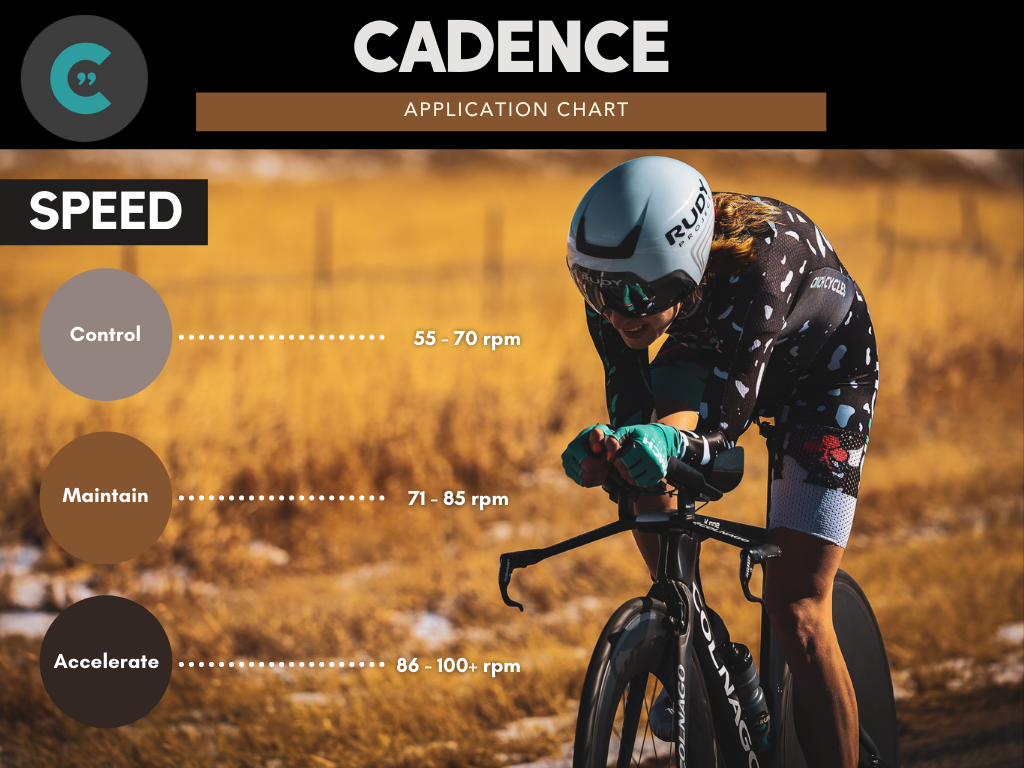
Cadence Technique #1 - High Cadence to Attack or Accelerate
Most people think high power is the most critical component of an acceleration or an attack. That is normal as I did too during my racing career. But the truth is, high cadence is the key to making an acceleration effective. For optimal performance accelerating, use high cadence when launching an attack, closing a gap, or raising the speed up.
Cadence Technique #2 - Mid Range Cadence to Maintain Speed
Becoming efficient at holding and maintaining speed is a real skill. Often I find riders "scrubbing" away their hard earned speed by riding too easy of a gear with too high of a cadence. By shifting a few gears down to find a mid range cadence WHEN at speed, you optimize your chain tension (torque), keeping a firm grasp on your speed. Try using the mid range cadence (with chain tension) to maintain the speed that you have built following an acceleration by you or another rider, a change in terrain giving you speed, or a change in conditions like a tailwind.
Cadence Technique #3 - Low Cadence to Control Effort
Oh those steep hills, rough surfaces, or even technical sections really tend to be the "end" of riders during hard efforts. These riders feel the friction and the slow speed, and they force the effort to try and keep their cadence, speed, and momentum. But this is the kiss of death!! In doing this they soar past their limits, flood with lactate, and drown in it in the ocean of the rest of the steep climb or difficult section. It doesn't have to go like this! Take the control back from the terrain and into your hands but using low cadence, both standing and seated. Just like the high cadence, it takes a lot of work to build the strength and efficiency to do this. Use low cadence to control effort on difficult terrain like steep hills or rough terrain.