CINCH CYCLING
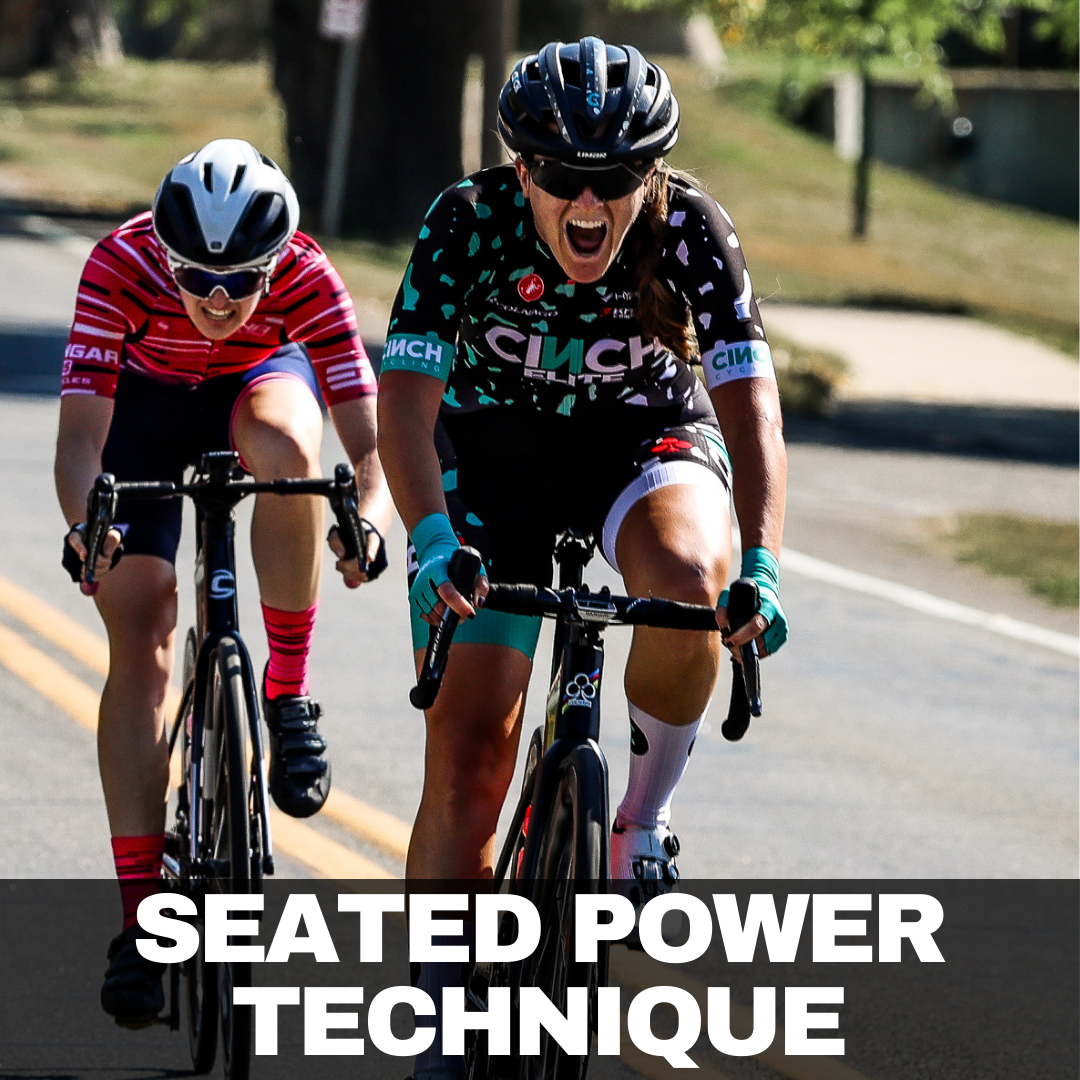
Two road cyclists sprint seated on a paved road, the lead rider in a teal and black Cinch Elite kit shouting with effort, a rider in a red striped jersey close behind. Overlay text reads "Seated Power Technique".

Training Tips · Mon Dec 27, 2021

How to Create More Power Seated

Good seated technique can make you faster with less power. See how Andie Fasen uses her hands, core, and feet to win a long sprint.

Technique is everything.

At CINCH we focus a lot on teaching and developing optimal technique. Power is often the only focus, but when you have good technique you can go much faster with less power.

Here we have CINCH athlete Andie Fasen using very good seated technique to win a long sprint at the end of hard road race. Andie is a rider that is in between all the Rider Type “norms” and thus, technique is the one of the big separators for her. She can climb well but is not a pure climber. She can sprint well but is smaller and less powerful than most sprinters. She has less threshold power than most time trialists, but she can beat them in A break away like here..

Andie’s race winning performances are great examples of how the little things make the big differences. Let’s look at her seated technique and what he does with the Three Points of Power to get maximum power transfer and make his watts faster than the other riders watts.

1. Hands:

Thumbs on top the the hoods to create a strong lock on the bars. This is used to pull in on the hoods while bring the elbow towards the core with each downstroke. Elbows are bent to help engage and use core on each downstroke.
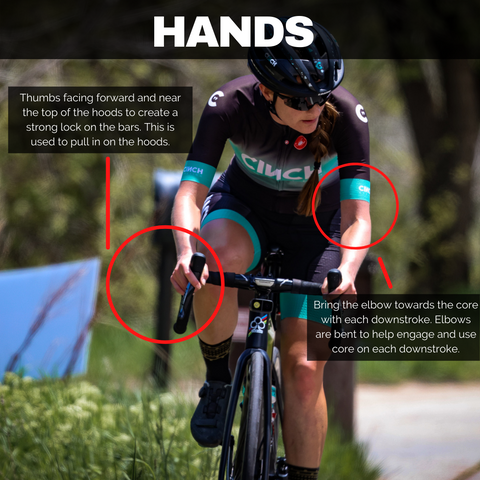
Annotated photo titled "HANDS" of a woman in a black and teal Cinch kit and helmet pedaling seated toward the camera. Red circles mark her hands, with thumbs forward on the hoods, and her bent elbow drawn in toward her core.

2. Core:

Pelvis forward on the seat and rotated down to get in front of downstroke making it more powerful.
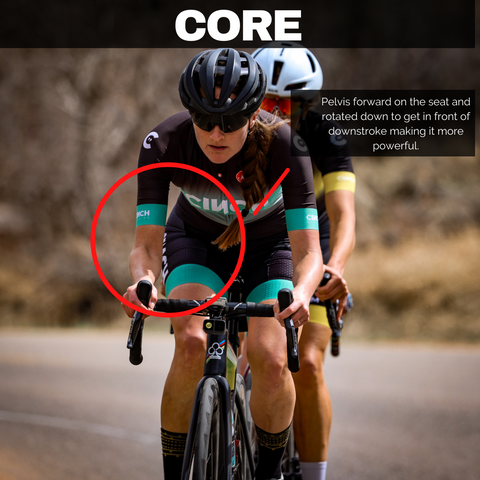
Front view of a woman cycling seated on a road bike in a black and teal kit, with a second rider behind her. A red circle marks her torso and hips. Caption reads "CORE: Pelvis forward on the seat and rotated down to get in front of downstroke.

3. Feet:

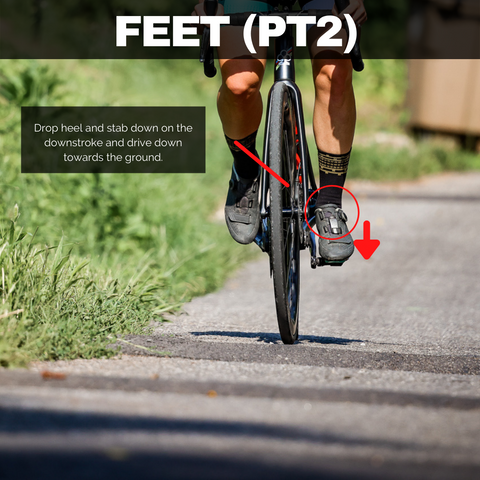
Heel up on the bottom of upstroke while while pulling up with calves, hamstrings, and hip flexors. Drop heel down over the top of the downstroke and drive with it to the bottom of the downstroke.
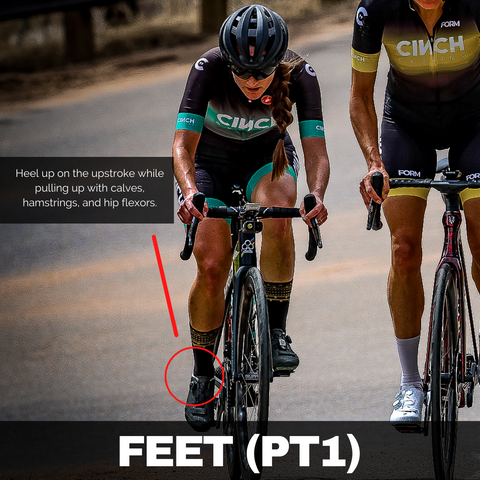
Two cyclists in CINCH kits ride side by side, seen from the front. A red circle highlights the front rider's raised heel on the upstroke. Caption: "Heel up on the upstroke while pulling up with calves, hamstrings, and hip flexors." Title: "FEET (PT1)".
Head-on view of a cyclist's legs and feet pedaling a road bike on a paved path, with a red circle and arrow on the lower foot marking a downward drive. Title reads "FEET (PT2)"; caption says to drop the heel and stab down on the downstroke.

Using the Three Points of Power with these three techniques, Andie is able to create more power while making that power faster as it is delivered to the bike in the most effective manner.
Next step

Ride your next hundred with a plan.

Forty-five minutes with a Cinch coach about your riding. Nothing to pay.

Book a free consult
Questions about this one?Ask Tom and other riders in Cinch Community. Sign in or join free.
Discuss this article
Written byKourtney DanielsonKourtney co-founded Cinch with Tom and created the 3-Sigma Nutrition System, which teaches busy cyclists how to fuel for peak performance.All 281 articles by Kourtney

Keep reading