CINCH CYCLING
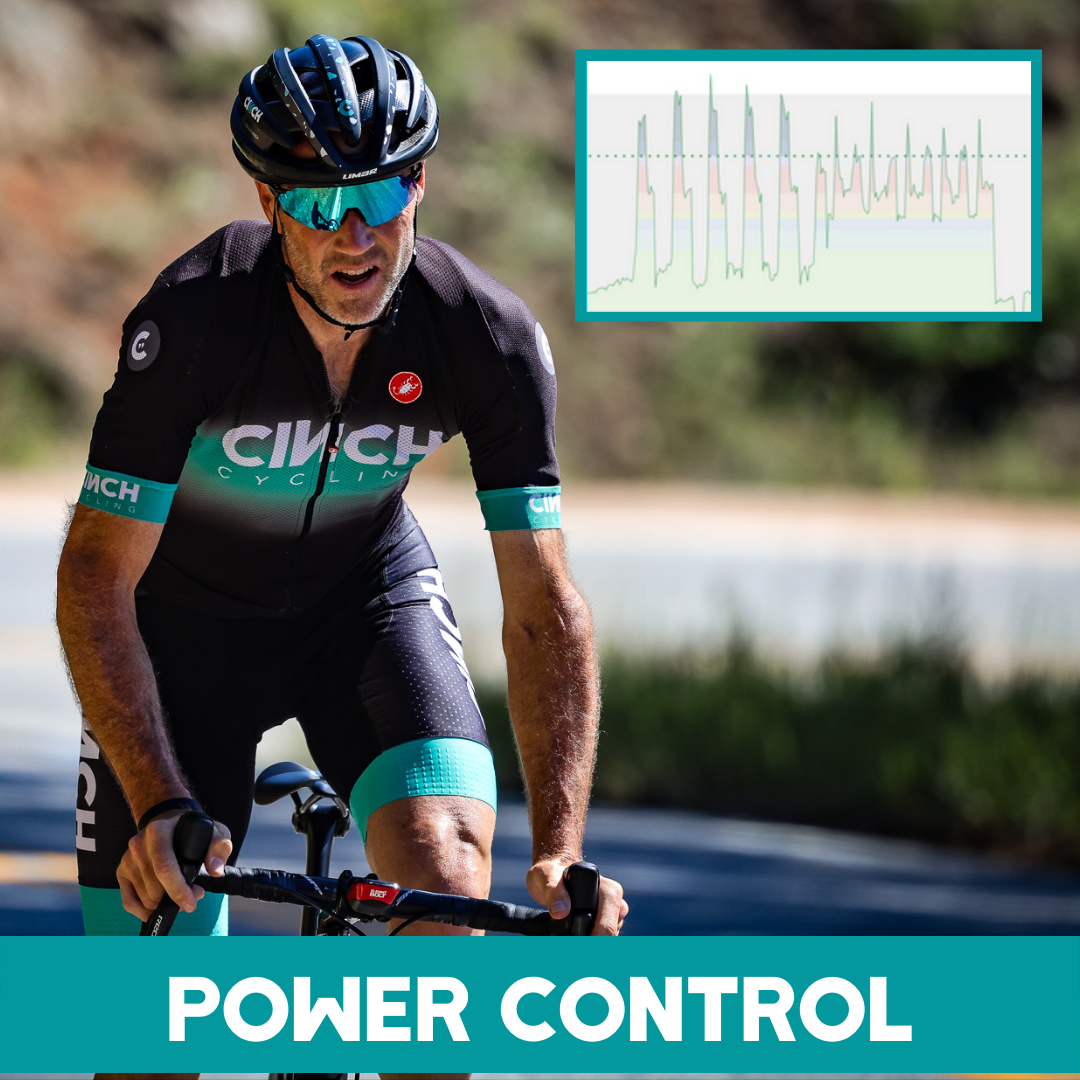
A cyclist in a black and teal Cinch Cycling kit and helmet rides toward the camera on a sunlit road. An inset power graph shows repeated sharp spikes above a dotted line, and a banner reads "Power Control.

Training Tips · Tue Dec 28, 2021

How to Create More Speed From Your Effort

Winning races isn't about averaging the most watts. Learn how Power Control uses terrain and momentum to turn the same effort into more speed.

Is there a way for you to go faster using less power? Yes! It is called Power Control.

In every race, there is the person who averages the most watts, hits the highest numbers, and then there is the person who wins. They are rarely the same rider. Even though our power-meter-obsessed sport has gotten to the point where it feels like the only thing that matters is normalized power or FTP, that isn’t always what wins races. Cycling is still a game like any other sport.

Take tennis, for example. The announcers might touch on the fact that Serena Williams can serve a ball at over 100 miles per hour, but that’s not the key talking point after the match. Instead, they discuss how brilliantly she placed her shots throughout the court, how she responded to her rival’s shots, how she used her powerful swing at just the right moment to hit the winning shot.

We want you to stop judging your cycling by the numbers on your power meter and start judging it based on speed. While it may be difficult to measure or quantify, speed is what wins races. Of course, the first step is training and riding enough to establish a foundation of power that you can produce as a cyclist. We’ll teach you is how to use that power in the most efficient way possible to maximize speed and momentum. That’s what Power Control is all about.

You’ll use the terrain to gain momentum when it suits the PTZ you intend to use. As things progress, you’ll find opportunities to maintain that momentum without going above or below that PTZ.

We know we just told you not to fixate on your power meter’s numbers, but we aren’t going to throw out those expensive components and devices. Instead, similar to your own power as a cyclist, we’ll use those tools carefully to chase the elusive momentum that will help you win. There are two key Power Control concepts: Power Floors and Power Ceilings.
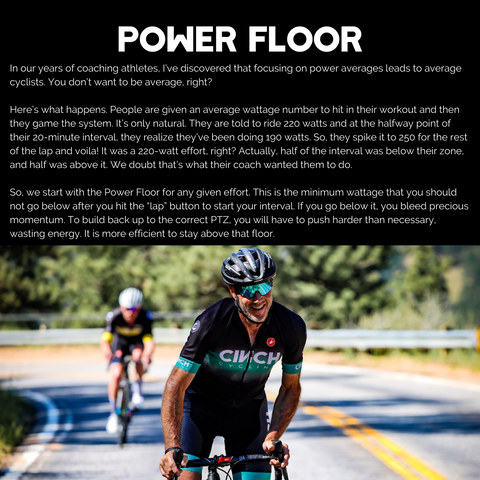
Graphic titled "Power Floor" with text on pacing intervals above a photo of a smiling cyclist in a black and teal CINCH jersey, helmet and sunglasses, riding toward the camera on a sunny road. Another rider follows behind.
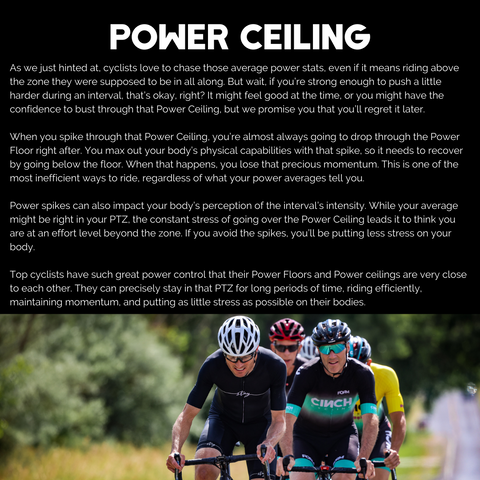
Four road cyclists in helmets and sunglasses ride close together in a tight group on a sunny road, leaning forward over their handlebars. One wears a black Cinch kit, and another wears a yellow jersey. Trees and fields blur behind them.
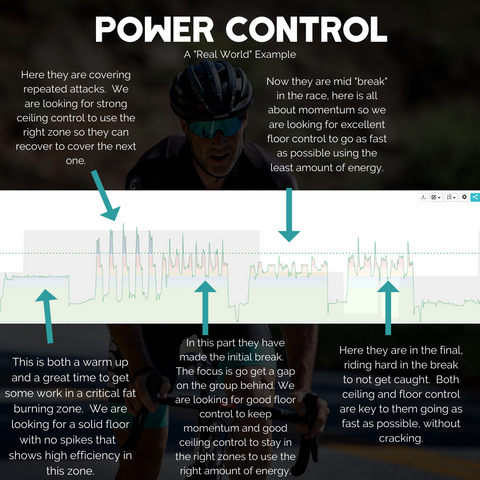
Infographic titled "Power Control: A Real World Example" showing a race power graph over a darkened cyclist photo. Teal arrows mark four phases: steady warm-up, repeated spiky attacks, mid-break, and the final, each with a coaching note on ceiling and floor control.
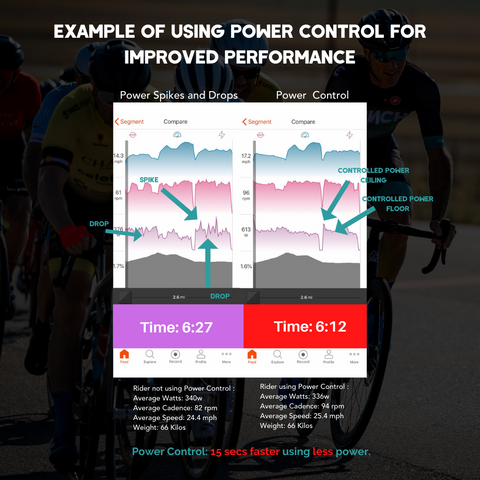
Infographic titled "Example of using power control for improved performance" comparing two segment runs. Without power control: 6:27, 340 W, with spikes and drops. With power control: 6:12, 336 W, steadier. Result: 15 seconds faster using less power.

Next step

Ride your next hundred with a plan.

Forty-five minutes with a Cinch coach about your riding. Nothing to pay.

Book a free consult
Questions about this one?Ask Tom and other riders in Cinch Community. Sign in or join free.
Discuss this article
Written byKourtney DanielsonKourtney co-founded Cinch with Tom and created the 3-Sigma Nutrition System, which teaches busy cyclists how to fuel for peak performance.All 281 articles by Kourtney

Keep reading