CINCH CYCLING
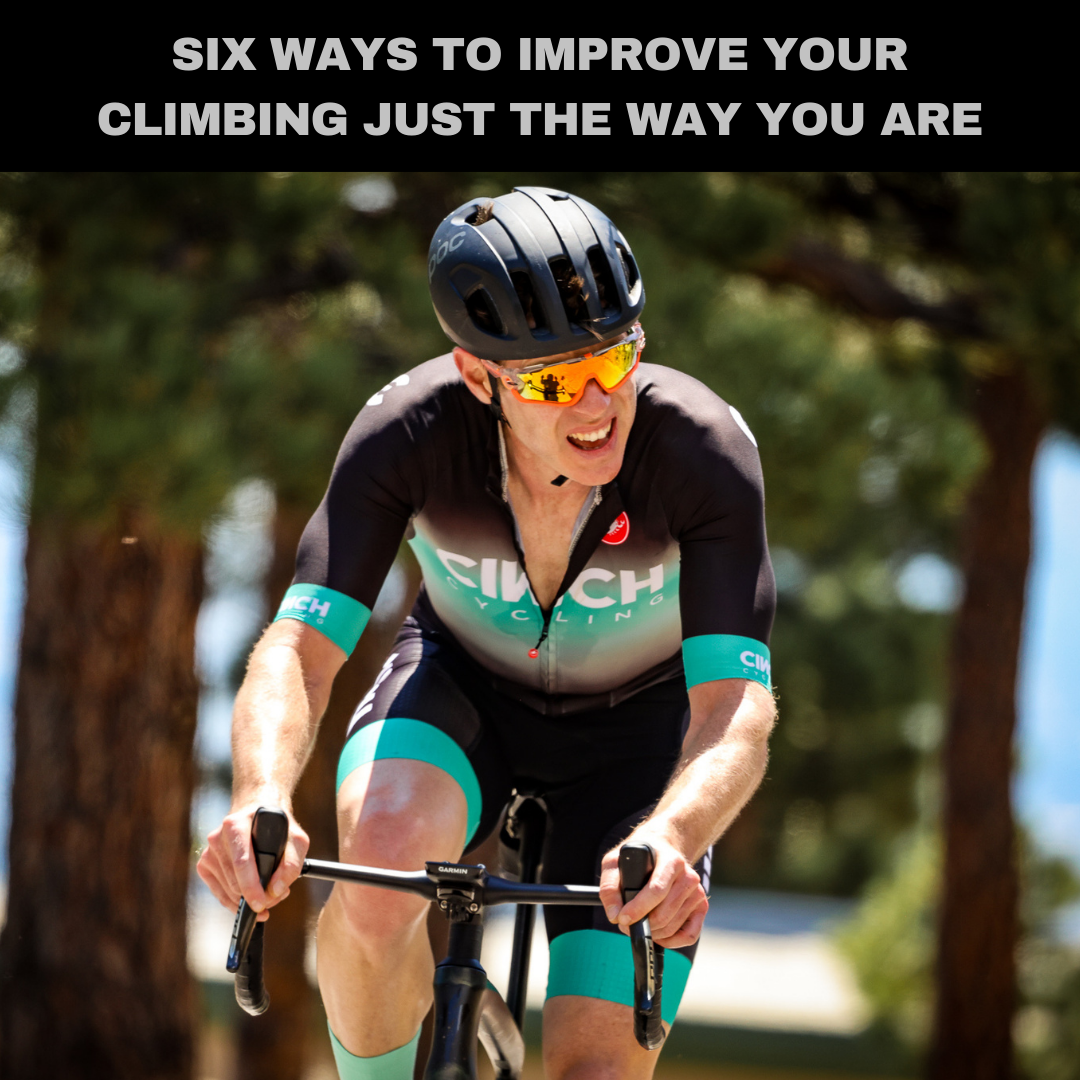
Banner reading "Six ways to improve your climbing just the way you are" above a cyclist in a black and teal Cinch Cycling kit, helmet and orange sunglasses, grimacing as he rides toward the camera with hands on the brake hoods, pine trees behind.

Training Tips · Mon Sep 27, 2021

How to Improve Your Climbing Just the Way You Are

Six practical pacing and technique tips you can use on your next ride to climb better right now, from smart starts to steady finishes.

Do you want to climb better? No problem, you have come to the right place!

You can become better at climbing just the way you are.

Here are six things you can do right now to improve your climbing and make that epic battle the the terrain a much better experience.

1. Don’t surge at the base of the climb to try and keep up, or to try to fight your dropping speed. Instead, hold back, separate yourself from the riders pushing the pace, and feel out the climb toHold find a pace that you can increase your effort from later on in the climb.
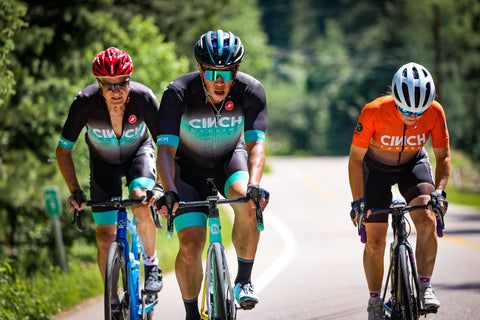
Three cyclists in matching Cinch team kits ride uphill together on a tree-lined road, two in black and teal jerseys and one in orange, all wearing helmets and sunglasses and looking focused as they climb.

2. Set your breathing rate to where you are able to deeply exhale at the end of each breathe. This is key because your breathing rate and depth will act as your guide all the way up the climb on how hard to go.
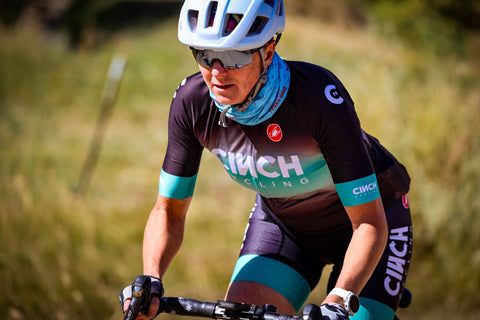
A cyclist in a light blue helmet, sunglasses and a teal neck gaiter rides hands on the handlebars, wearing a black and teal Cinch Cycling kit, with sunlit dry grass blurred behind.

3. Ride the climb for speed instead of fighting the terrain in the places there is less speed. Push the pace on the transitions from steep to shallow gradient while holding back on the transitions from shallow to steep gradients.
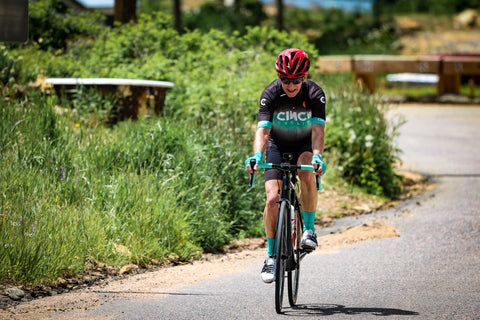
A cyclist in a red helmet, sunglasses, and a black and teal "CINCH" kit climbs a paved road on a road bike. They sit upright with hands on the tops of the bars, and grassy shrubs line the roadside on a sunny day.

4. Change your cadence to manage the different gradients. Use a lower cadence in areas of the climb that push you towards going over your zones. Then use a higher cadence in areas where you can accelerate to build speed like the shallow sections.

A cyclist in a white helmet, sunglasses and black and teal kit climbs a paved road seated, hands on the hoods, looking ahead. Two more riders follow behind near a guardrail, with trees and dry grass along the roadside.

5. Look ahead. Don’t be a victim of the climb! Instead, look ahead to take control to “drive” the climb proactively. Plan your actions around what’s coming.
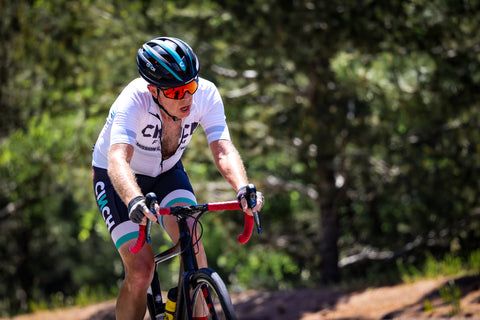
A cyclist in a white jersey, blue helmet and orange-tinted sunglasses rides uphill on a road bike with red handlebars, hands on the hoods and eyes forward, with green trees in the background on a sunny day.

6. See your effort through until the end of the climb. Don’t change how hard you try in the middle or last part of the climb. Usually riders will back down in the last half of the climb as they lose focus or ambition to keep fighting. Commit to holding the same effort you started with to the end.
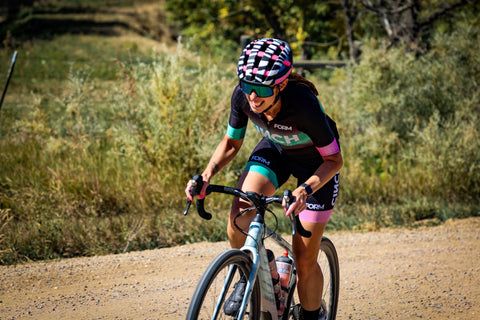

A woman in a pink-and-black patterned helmet, green sunglasses, and black kit rides a gravel bike up a dirt road, leaning forward with hands on the bar tops and a focused, steady effort. Dry grass and shrubs line the road.

Next step

Ride your next hundred with a plan.

Forty-five minutes with a Cinch coach about your riding. Nothing to pay.

Book a free consult
Questions about this one?Ask Tom and other riders in Cinch Community. Sign in or join free.
Discuss this article
Written byKourtney DanielsonKourtney co-founded Cinch with Tom and created the 3-Sigma Nutrition System, which teaches busy cyclists how to fuel for peak performance.All 281 articles by Kourtney

Keep reading