Standing efficiency is an important skill to have. In fact, it’s so important to us that inside of CINCH we have created a whole Execution component called Standing Control.
The reason why Standing Control is so important is because it is a way to use your body weight to increase the torque delivered to your cranks. Torque is the actual circular force that you place on your crank during the pedal stroke. When you stand correctly, you add your weight to the effort you to putting out physically. Basically, the more torque you add to the cranks, the more speed you get out of your effort from your bike. When you tag-team your body weight to your physical output, you up the speed you get tremendously.
There are two basic uses for standing.
I. Accelerating using Standing Control
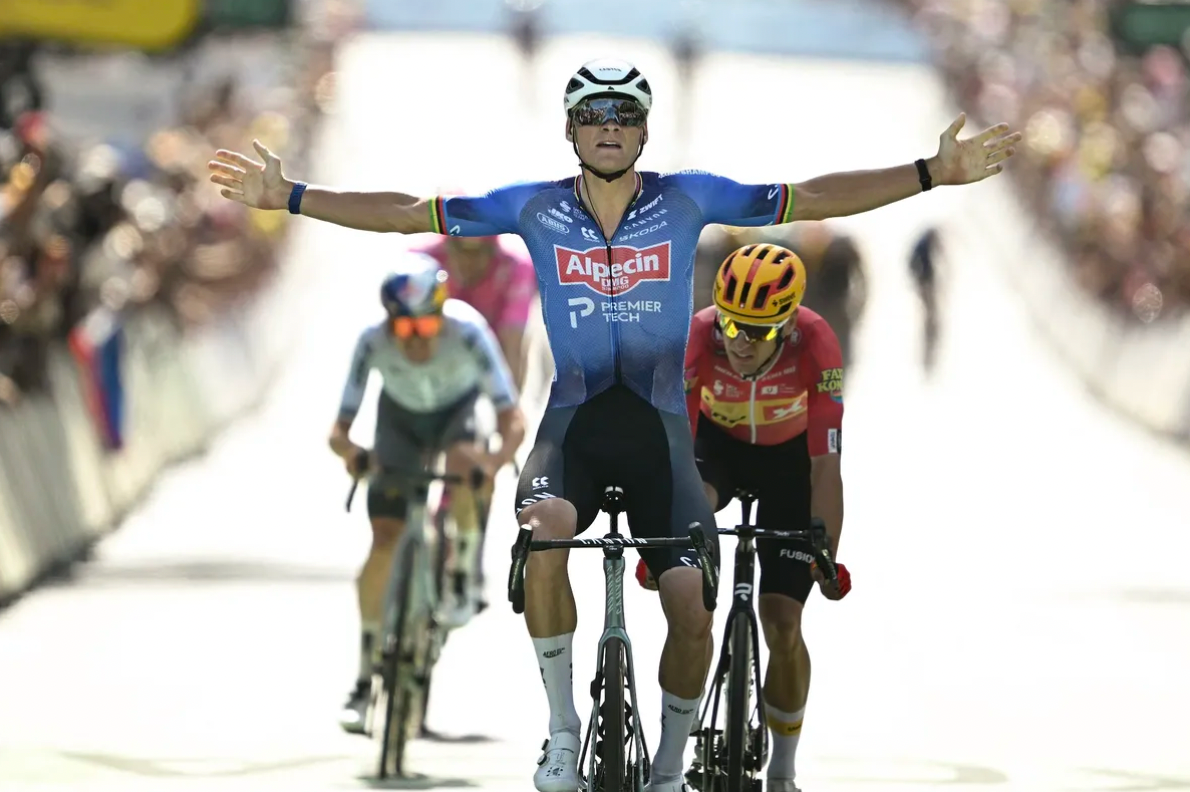
With a sharp transition from sitting to standing, you are able to create a snappy acceleration. This is done by aggressively adding your body weight into each pedal stroke while you lift yourself out of the saddle. The leverage that is created in the standing motion can sharply increase your total power output resulting in a boost of speed to accelerate. This is best used to go from a slower speed to a higher speed and done in shorter intervals such as 30 seconds.
II. Maintaining Speed and Momentum using Standing Control
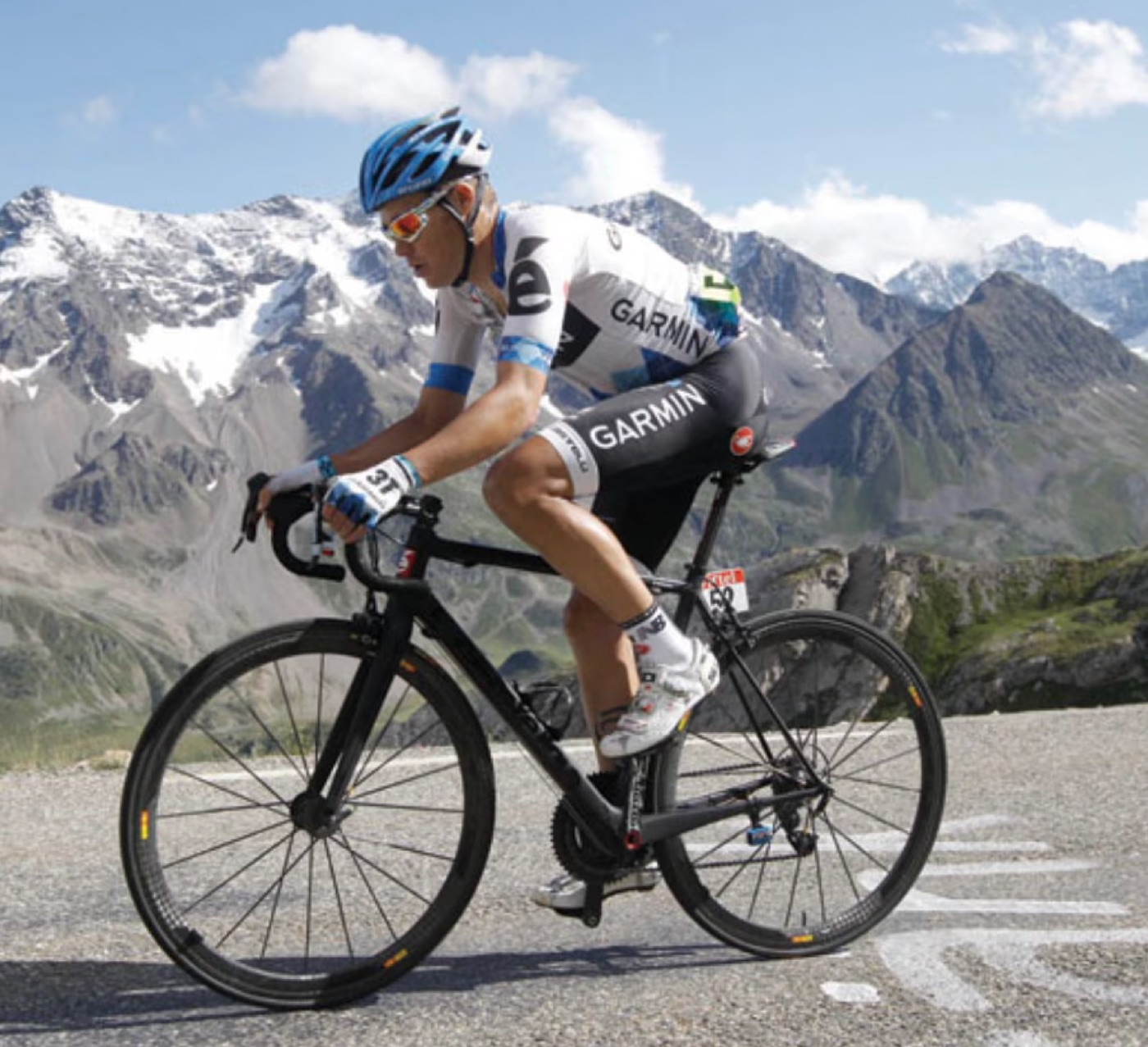
Standing can also help you save energy. This can be done to maintain your speed while reducing your effort. A situation this could be used in is when you enter the first part of a climb from a downhill or flats. Instead of adding physical effort to try and maintain your entrance speed, adding body weight will help you increase the power output without any energy. This standing technique is best used for longer intervals of one to three minutes.
With both standing techniques, body position is everything. Some advice to help you start to find these unique body positions is to first find the sweet spot where your triceps are balancing your body. Then drop your body weight into each pedal stroke. This substitutes much of the pushing and pulling effort you are putting out by adding in your body weight into the pedal stroke.
To help you improve your Standing Control, we have created a 3-step process to guide you into finding the right position to improve your standing control.
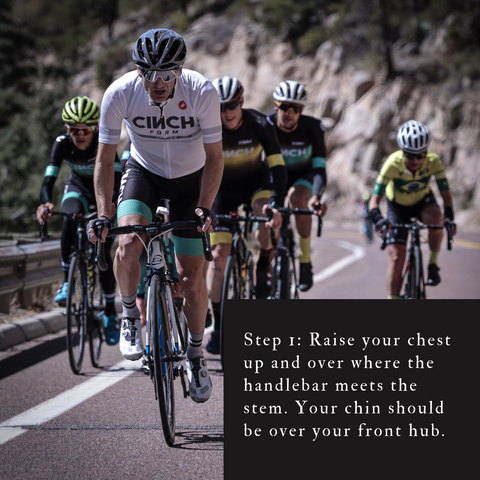
Step 1: Raise your chest up and over where the handlebar meets the stem. Your chin should be over your front hub.
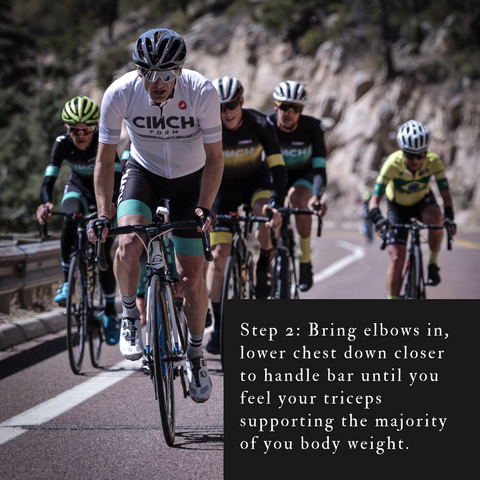
Step 2: Bring elbows in, lower chest down closer to handle bar until you feel your triceps supporting the majority of you body weight.
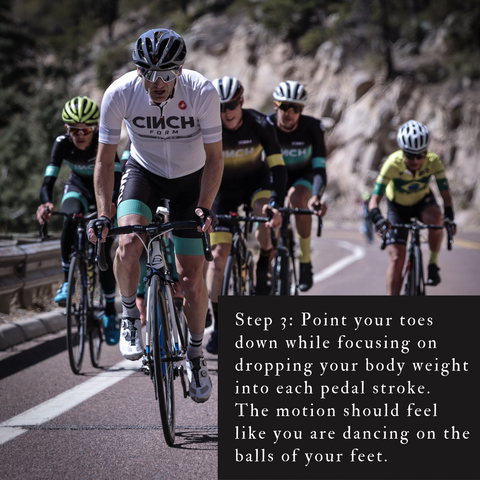
Step 3: Point your toes down while focusing on dropping your body weight into each pedal stroke. The motion should feel like you are dancing on the balls of your feet.
Take your cycling performance and control up a notch by using this knowledge and these techniques to make Standing Control a strength for you instead of a weakness.