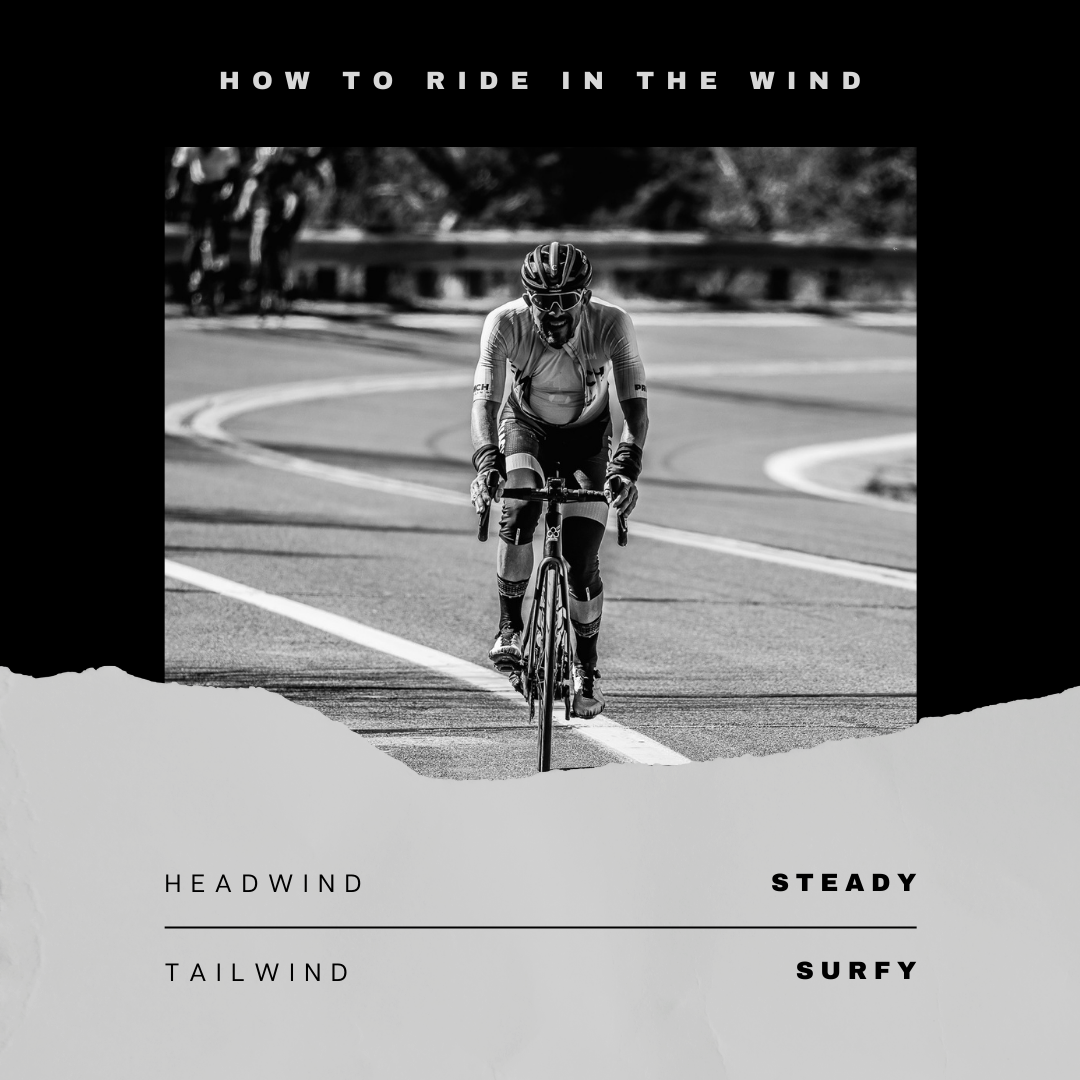

The wind is a huge component in cycling. In fact, we believe it to be the highest level piece to the cycling performance equation.
No matter where you are, it always exists. Flats, climbs, and downhills there is always some sort of wind. Even in the most sheltered areas, there is a breeze that is affecting you’re riding in some way or another.
So what do you do? How do you you ride in each type of wind? For foundational purposes, let’s assume you are riding solo.
Which way is the wind coming from?
So let’s begin with how do you find which way the wind is coming from? You listen to your wheels. Yes, this simple, but extremely affective method will work on all scenarios and help you to accurately pin point where the wind is coming from.
If you hear the sound of your tires on the pavement or ground, it is a tailwind. If you cannot hear you wheels and tires, instead the sound of the wind is in your ears, it is a headwind. Simple!
How do you ride in a headwind?
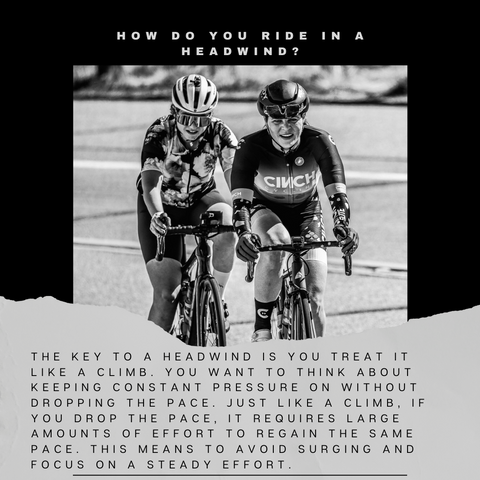
The key to a headwind is you treat it like a climb. You want to think about keeping constant pressure on without dropping the pace. Just like a climb, if you drop the pace, it requires large amounts of effort to regain the same pace. This means to avoid surging and focus on a steady effort.
How do you ride in a tailwind?
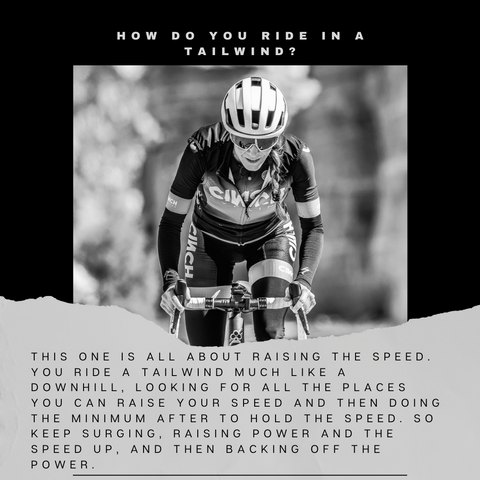
This one is all about raising the speed. You ride a tailwind much like a downhill, looking for all the places you can raise your speed and then doing the minimum after to hold the speed. So keep surging, raising power and the speed up, and then backing off the power. You will see the wind from behind will hold your speed allowing you to recover from the surge.
There you go! How to ride in wind made a CINCH.