CINCH CYCLING
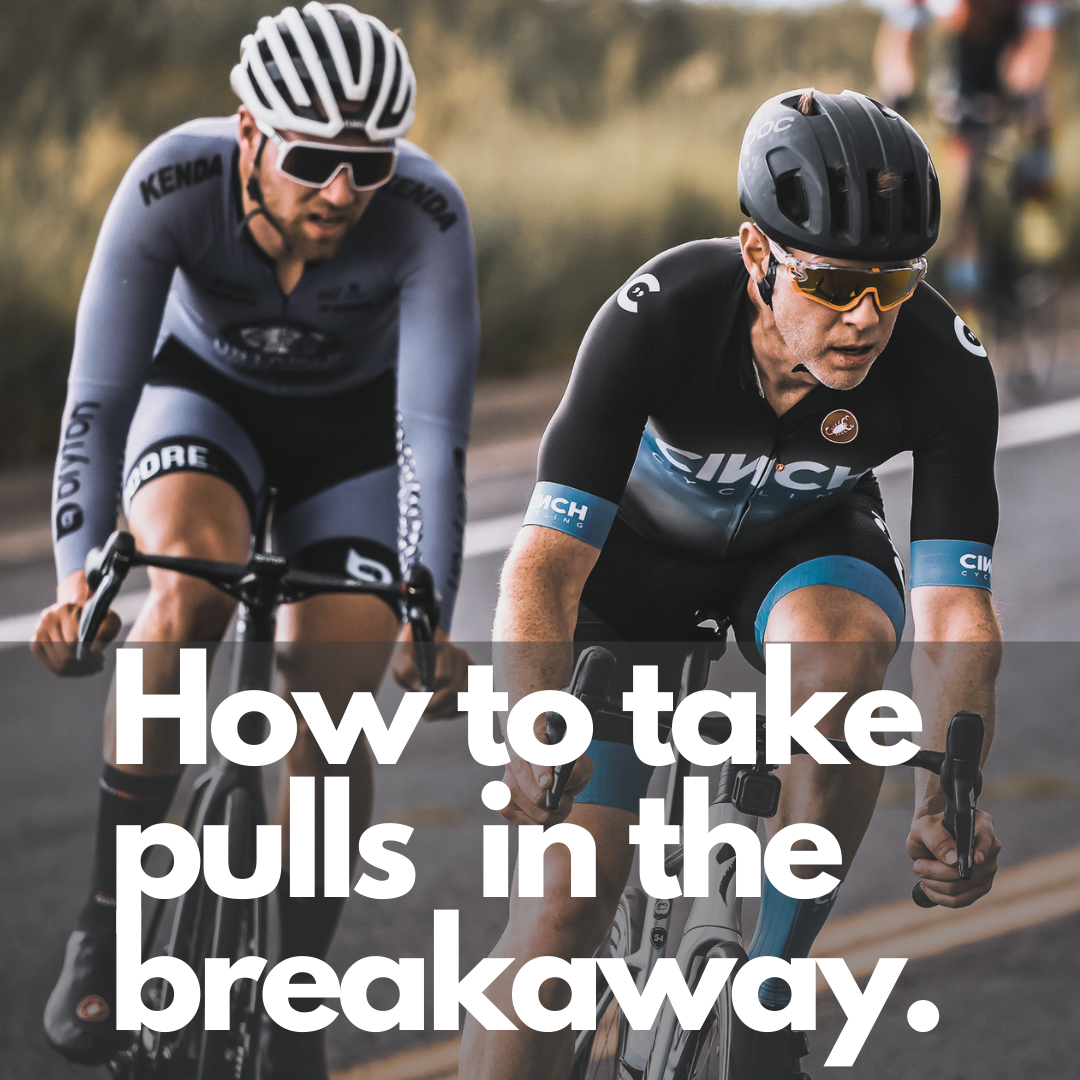
Two road cyclists ride side by side on a paved road, one in a gray Kenda kit and white helmet, the other in a black and blue Cinch kit. Large overlay text reads "How to take pulls in the breakaway." Another rider is blurred behind.

Training Tips · Mon Aug 2, 2021

How to Take Pulls in the Paceline or Breakaway

Learn how long and how hard to pull by reading the terrain, wind, and rivals, so your group goes faster while you save energy.

How long and how hard should you pull in a paceline or breakaway?

To determine that I recommend following these simple rules.

1️⃣ First, pulling in a paceline break away is not to be used as an offensive move. It is not to hurt or drop other riders. Instead, pulling is about giving an effort that enables the group as a whole to go faster using less energy.
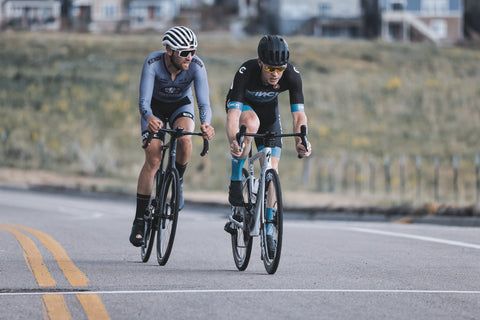
Two cyclists in team kit ride side by side on a paved road, both wearing helmets and sunglasses, with a grassy hillside and houses behind them. They are riding close together, as in a paceline or breakaway.

2️⃣ Pay attention to the terrain. Take longer and easier pulls on the climbs, while on the downhills take shorter, more intense pulls. This lets the others in the group have an easier ride, and more likely to be able to help with their share of the work.
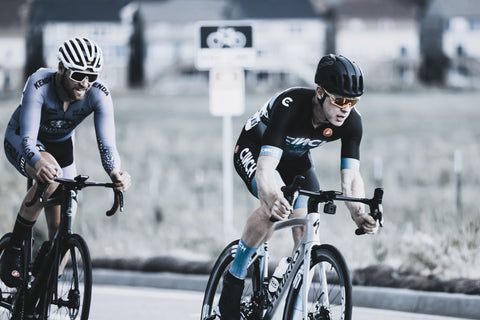
Two cyclists ride closely in a paceline on a road, both in aero helmets, sunglasses and team kits, hands on the drops. The rider in front, in black, leads while a second rider in gray follows just behind his shoulder.

3️⃣ Pay attention to the wind. Look for flags and listen to the sound of your wheels. If you can hear strongly the sound of your wheels it’s a tailwind/crosswind, if you cannot that means it’s a headwind. For headwind take longer, steady pulls with a higher intensity. For tailwind and or crosswind, take short and lower intensity pulls.
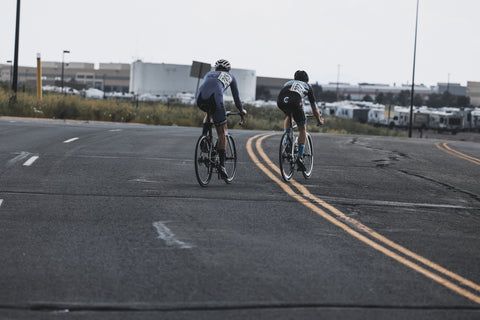
Two cyclists ride single file away from the camera on a wide, flat road with double yellow lines, the rear rider tucked close behind the leader's wheel, with low buildings and parked trailers in the distance.

4️⃣ Pay attention to your competition. One of the reasons we are taking a conservative approach to pulling is to be ready for your competition to try and drop you. They are most likely to try (and succeed) on climbs and in tail/cross winds. In both these places, with you riding conservatively you are not only keeping your group moving along consistently, but you are also ready to react to anything that is thrown at you.
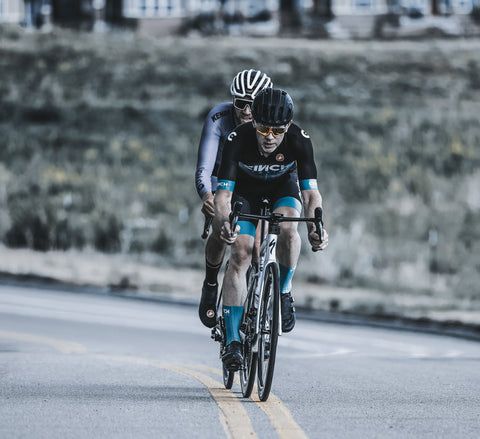
Two cyclists ride in a tight line down a paved road, the lead rider in a black and teal kit with sunglasses and a black helmet, while a second rider in a white helmet sits right behind his rear wheel, drafting.

We coach people, like you, to help them improve their cycling. These concepts here which I learned by winning and failing in stages of Grand Tours can help you become a better cyclist at your level. Let’s go!
Next step

Ride your next hundred with a plan.

Forty-five minutes with a Cinch coach about your riding. Nothing to pay.

Book a free consult
Questions about this one?Ask Tom and other riders in Cinch Community. Sign in or join free.
Discuss this article
Written byKourtney DanielsonKourtney co-founded Cinch with Tom and created the 3-Sigma Nutrition System, which teaches busy cyclists how to fuel for peak performance.All 281 articles by Kourtney

Keep reading