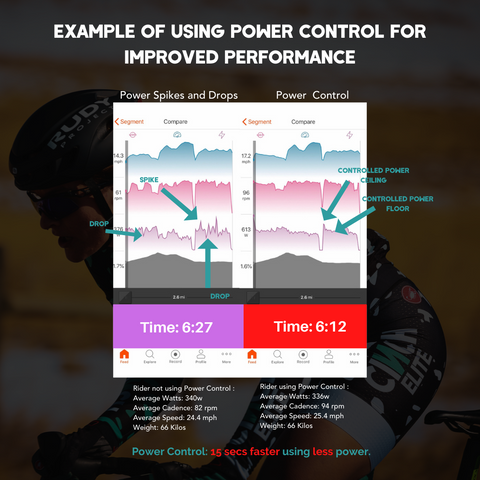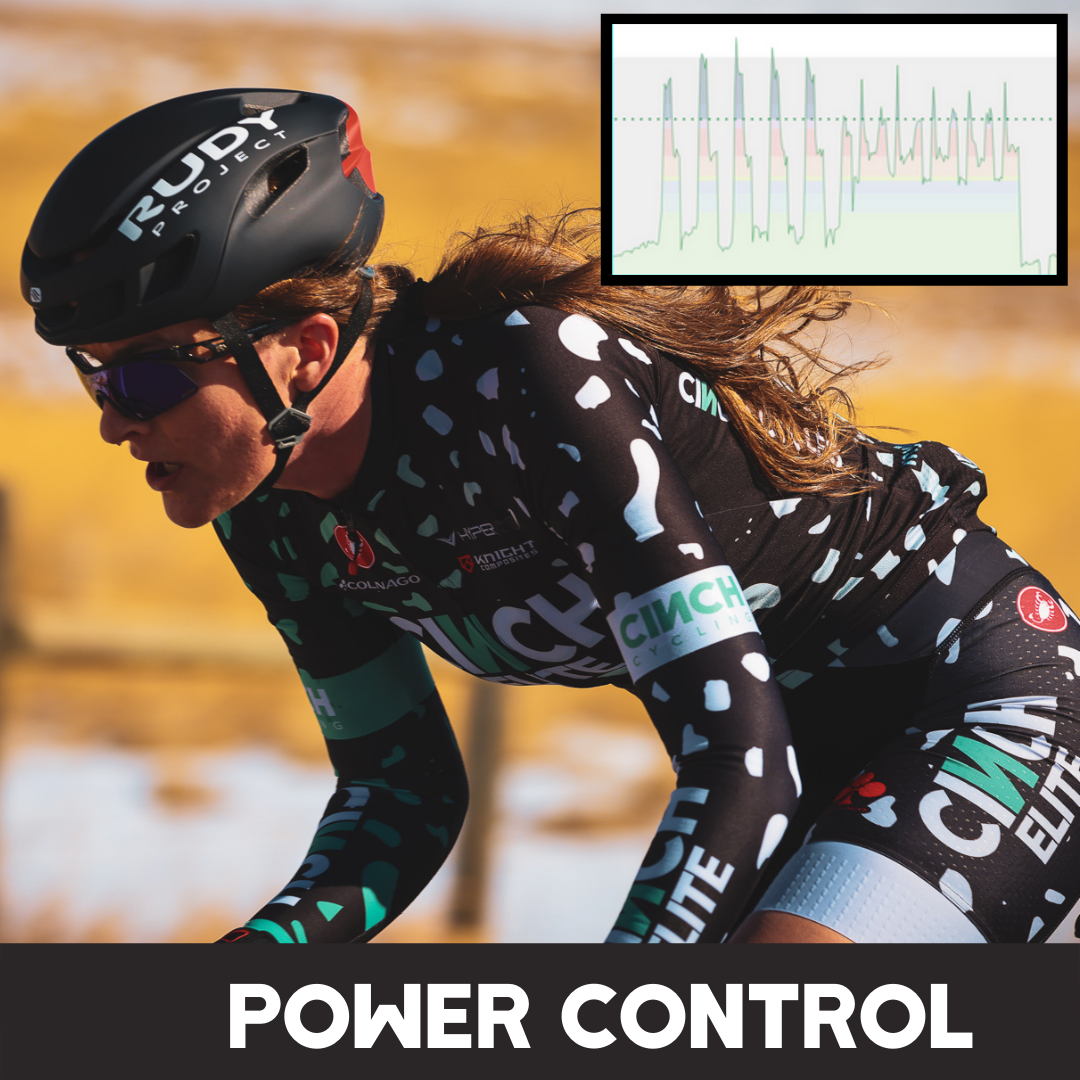

Is there a way for you to go faster using less power? Yes! It is called Power Control.
In every race, there is the person who averages the most watts, hits the highest numbers, and then there is the person who wins. They are rarely the same rider. Even though our power-meter-obsessed sport has gotten to the point where it feels like the only thing that matters is normalized power or FTP, that isn’t always what wins races. Cycling is still a game like any other sport.
Take tennis, for example. The announcers might touch on the fact that Serena Williams can serve a ball at over 100 miles per hour, but that’s not the key talking point after the match. Instead, they discuss how brilliantly she placed her shots throughout the court, how she responded to her rival’s shots, how she used her powerful swing at just the right moment to hit the winning shot.
We want you to stop judging your cycling by the numbers on your power meter and start judging it based on speed. While it may be difficult to measure or quantify, speed is what wins races. Of course, the first step is training and riding enough to establish a foundation of power that you can produce as a cyclist. We’ll teach you is how to use that power in the most efficient way possible to maximize speed and momentum. That’s what Power Control is all about.
You’ll use the terrain to gain momentum when it suits the PTZ you intend to use. As things progress, you’ll find opportunities to maintain that momentum without going above or below that PTZ.
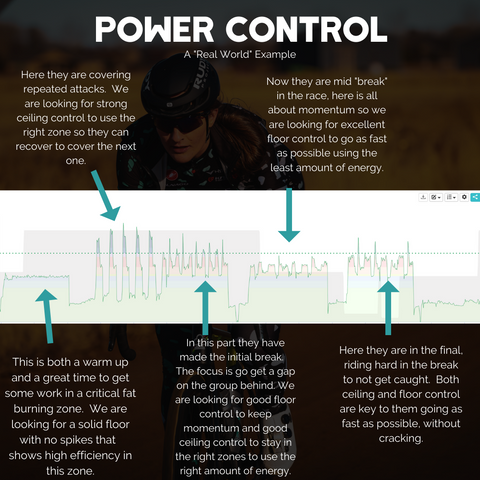
We know we just told you not to fixate on your power meter’s numbers, but we aren’t going to throw out those expensive components and devices. Instead, similar to your own power as a cyclist, we’ll use those tools carefully to chase the elusive momentum that will help you win. There are two key Power Control concepts: Power Floors and Power Ceilings.