CINCH CYCLING
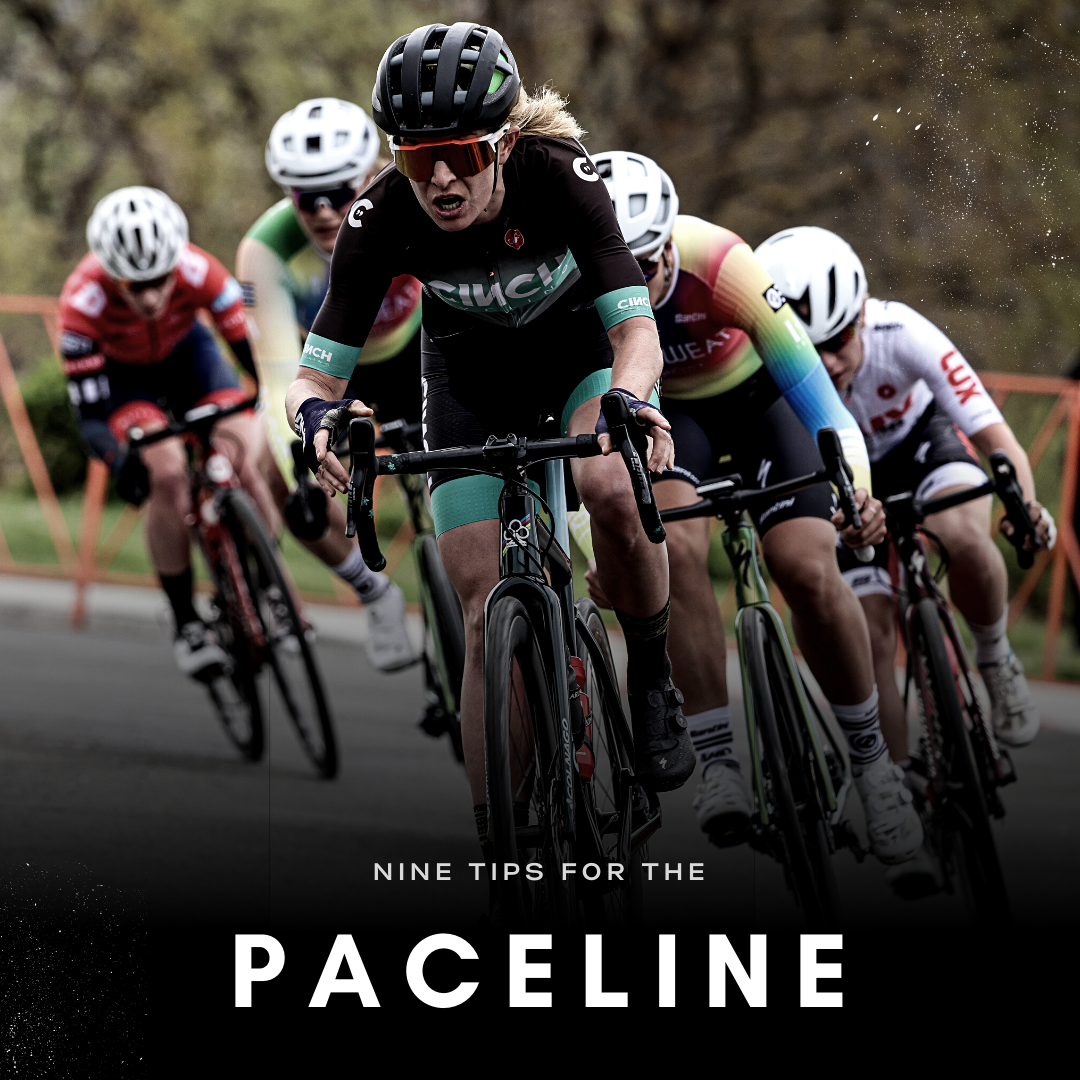
Five road cyclists ride in a tight single-file line on a curving road, the leader in a black and teal CINCH kit pulling at the front with a strained face. Overlaid text reads "Nine tips for the Paceline.

Training Tips · Thu Sep 30, 2021

Nine Tips To Improve Your Paceline Riding

A paceline exists to save energy while moving fast, not to shell riders. Nine practical tips help your group ride smoother, in training or in a race.

In this post we are going to share with you some tips to improve your paceline riding. This can be used both in group riding and in racing.

First and foremost, it is important to first address the purpose of a pace line. begin let us blow your minds with some perspective.

That is to work as a group to USE THE LEAST AMOUNT OF ENERGY to go as fast as possible.

Say what? A paceline is not used to hurt other riders and drop as many people as possible?

NO!!

To drop other riders you would use an attack, and that is something we will cover in another post.

A paceline is often incorrectly used to “ninja star” the group and drop riders. This “ninja star” ultimately moves the group around slower, weakens all the riders, and drops only the riders who will not be a factor in the end of the ride or race.

To create an effective paceline, one that moves fast and that all riders benefit, try following these nine tips.

1. Take long pulls in a headwind.
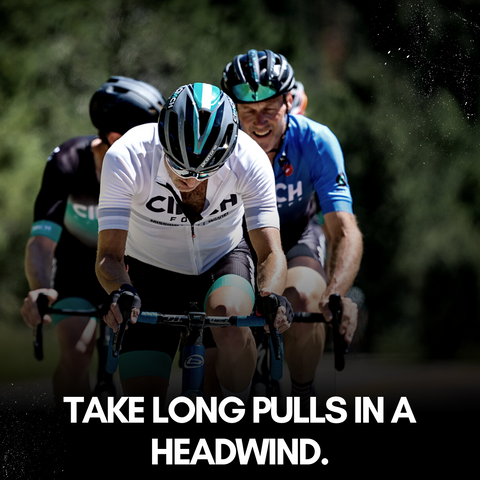
Three cyclists ride in a tight paceline on a tree-lined road, the lead rider in a white jersey with head down and hands on the bars, two riders drafting behind. Overlaid text reads "Take long pulls in a headwind.

2. Take short pulls in a tailwind.
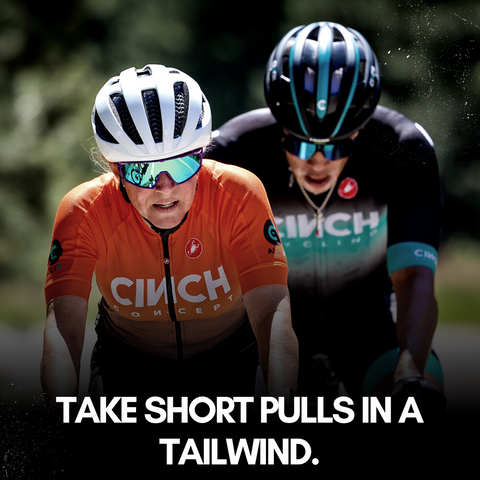
Two cyclists ride close together toward the camera, one in an orange Cinch jersey and white helmet, the other behind in a black and teal Cinch kit and dark helmet. Overlaid text reads "Take short pulls in a tailwind.

3. Only stand to get back into the paceline at the back of the group.
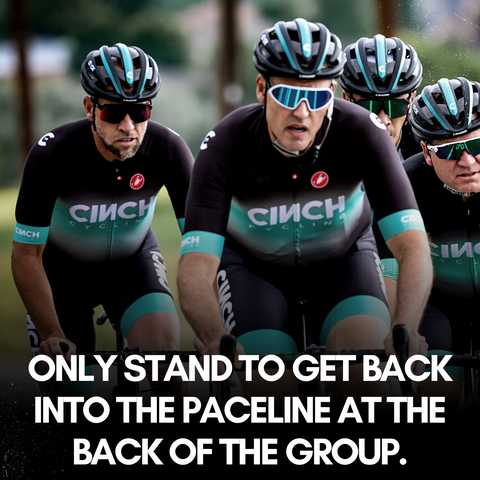
Four cyclists in matching black and teal CINCH Cycling kits and helmets ride closely in a group, wearing sunglasses. Overlaid text reads: "Only stand to get back into the paceline at the back of the group.

4. Ride slightly off to one side of the rider that you are behind.
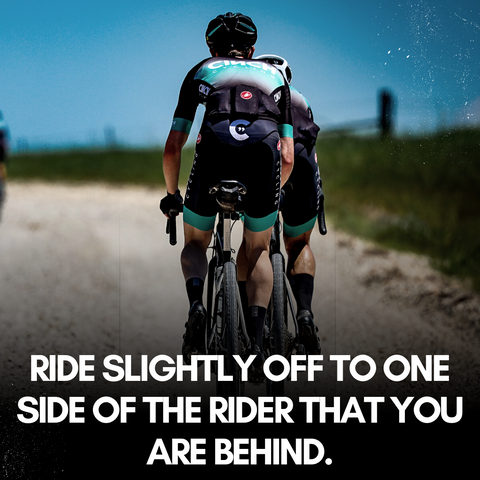
Two cyclists in matching black and teal kits ride on a gravel road, seen from behind. The rear rider sits slightly offset beside the wheel of the rider ahead. Overlaid text reads "Ride slightly off to one side of the rider that you are behind.

5. Commit to the side you choose to ride behind on.
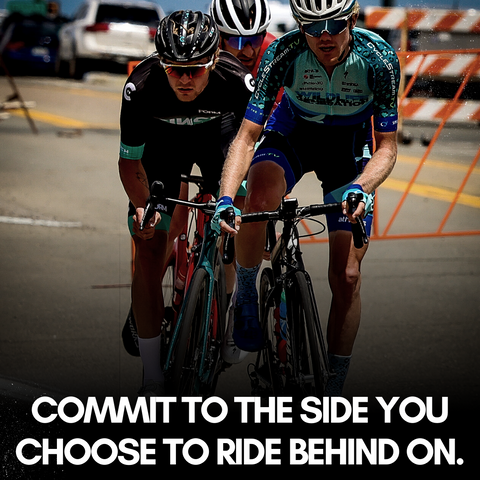
Three road cyclists ride closely in a line on pavement, the front rider in a teal jersey, a second beside and slightly behind, a third partly hidden. Caption reads "Commit to the side you choose to ride behind on.

6. Look ahead up the road, do not stare at the wheel in front of you.
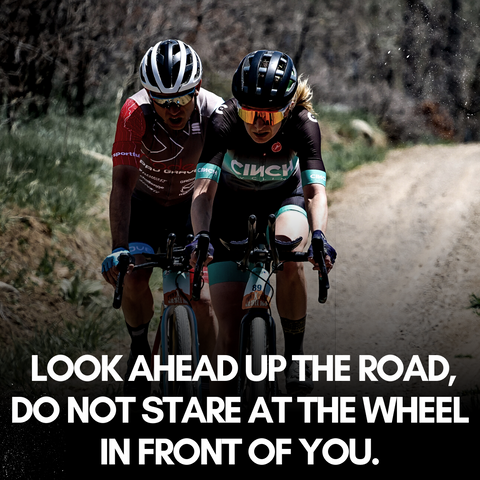
Two gravel cyclists ride close together on a dirt road, one tucked behind the other, both in helmets and sunglasses. Overlaid text reads: "Look ahead up the road, do not stare at the wheel in front of you.

7. Choose your line based on the road ahead of you, not the rider in front of you.
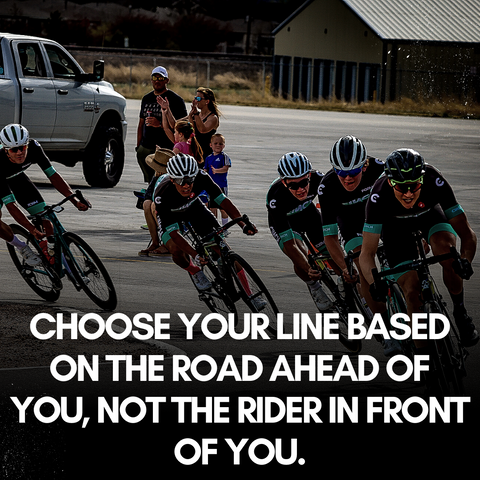
Six cyclists in matching black and teal kits lean through a corner on pavement while spectators, including a child, watch from the side. Overlaid text reads: "Choose your line based on the road ahead of you, not the rider in front of you.

8. Choose pull strength and during based of KEEPING the SAME pace of the group.
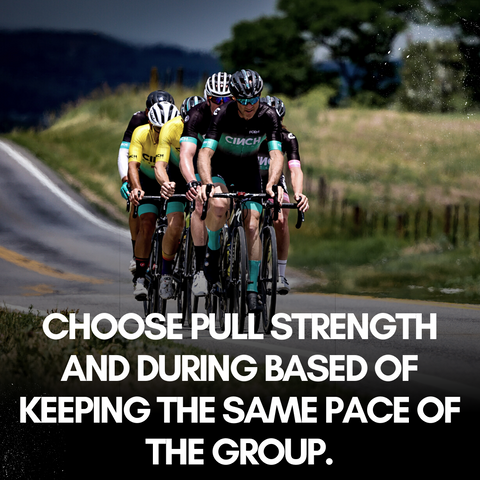
A tight group of six cyclists rides single file toward the camera on a rural road, the lead rider in a black Cinch kit with others in black and yellow behind. Overlaid text reads "Choose pull strength and during based of keeping the same pace of the group.

9. Use your front brake as a clutch instead of passing the rider in front of you when they slow or stopping pedaling abruptly.
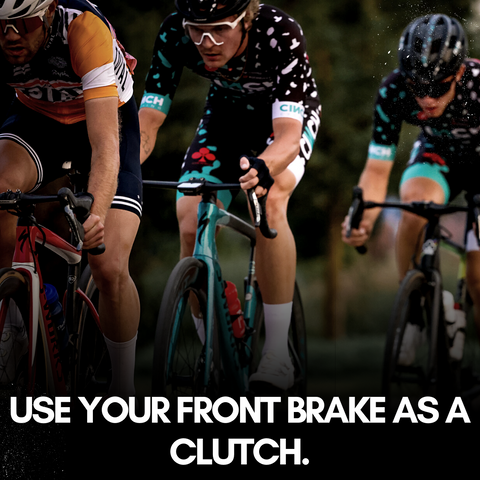
Three cyclists in helmets and glasses ride close together in a paceline on a road, hands on the handlebars near the brake levers. Overlaid white text reads "Use your front brake as a clutch.

Next step

Ride your next hundred with a plan.

Forty-five minutes with a Cinch coach about your riding. Nothing to pay.

Book a free consult
Questions about this one?Ask Tom and other riders in Cinch Community. Sign in or join free.
Discuss this article
Written byKourtney DanielsonKourtney co-founded Cinch with Tom and created the 3-Sigma Nutrition System, which teaches busy cyclists how to fuel for peak performance.All 281 articles by Kourtney

Keep reading