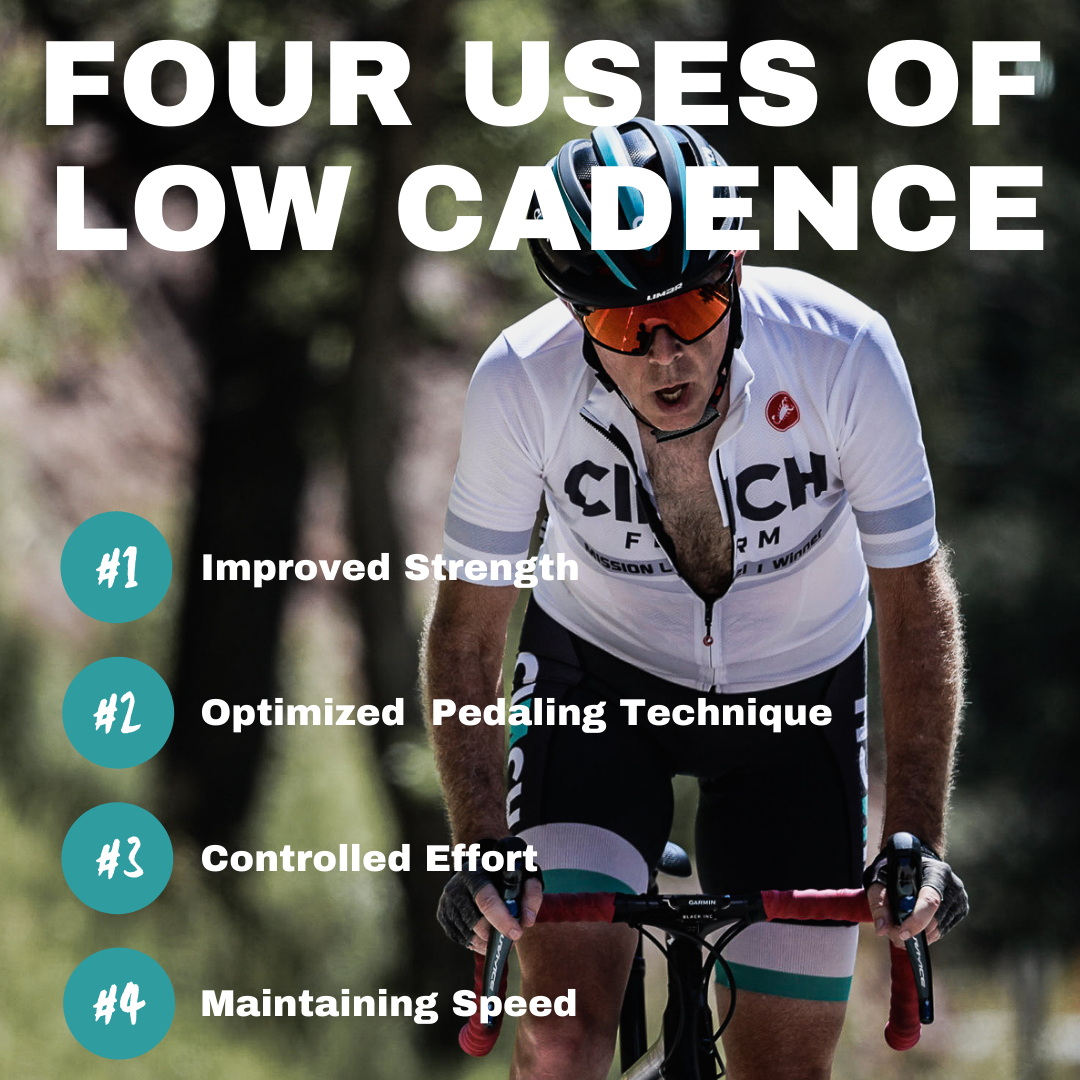

There are four uses that low cadence can optimize performance.
Low Cadence (50 - 70 rpm) can be used to raise your cycling performance. When I entered the coaching world from the professional athlete ranks, I found that most cyclists did not know the benefits of training and riding with low cadence.
While many preach low cadence is not an optimal cadence for all cycling, I argue that it can be very useful in improving cycling performance in the following four areas:
I. Improved Strength
Low cadence training is ideal for on-the-bike strength training. The low rpm’s create a scenario that allows you to pedal with high torque (high force). This extra torque requires more muscle fiber activation to push the cranks around, thus being great for strength training.

II. Optimized Pedaling Technique
Pedaling at a low cadence enables you to feel your pedal stroke technique and track each muscle group’s timing and use as you go around each circle. You can feel the “dead spots” in your stroke where you need to work on strength and technique as well.

III. Controlled Effort
Low cadence can be used on the execution side of performance for allowing you to stay in your physical zones when the terrain potentially forces you to ride too hard. A good example of this is a steep climb where if you try to ride the higher cadence that you are normally riding in, it will push you above your threshold climbing zones. Dropping down into a lower cadence will help you keep momentum up the climb while allowing you to use the optimal lower physical zones.

IV. Maintaining Speed
Finally, you can use low cadence as a way to maintain speed. Like we said in #1, using low cadence helps you add high torque. When you have speed naturally your torque drops off. This limits the potential for your overall speed greatly. To maximize the speed you can get, try can shift a few gears down and add high torque to the drivetrain once you start gaining speed. This will set you up to keep optimal torque and chain tension keeping the speed without scrubbing any of it. This also allows you to keep the same speed and lower the power to effectively use higher speed sections as places you can recover.