Believe it or not, but riding long hours is not the best way to improve your endurance. Instead, training the details that actually influence your endurance are what actually make the biggest impact.
So why are long rides not the best and only way to influence your endurance? Because often times they are so big and daunting that riders overlook the things that make difference as their focus becomes survival mode.
Let’s dive into what influences endurance the most.
Fueling: Eat in the Performance Window.
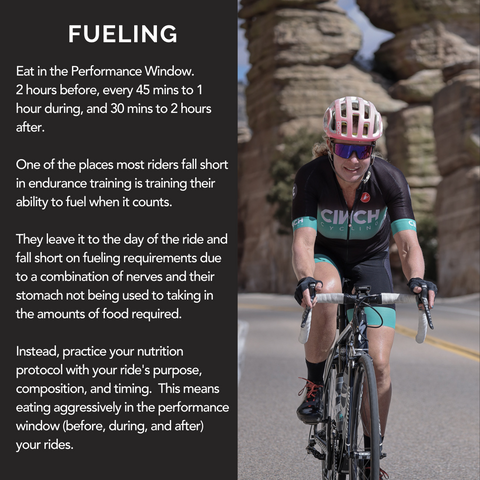
One of the places most riders fall short in endurance training is training their ability to fuel when it counts. They leave it to the day of the ride and fall short on fueling requirements due to a combination of nerves and their stomach not being used to taking in the amounts of food required. Instead, practice your nutrition protocol with your ride’s purpose, composition, and timing. This means eating aggressively in the performance window (2 hours before, every 45 mins to 1 hour during, and 30 mins to 2 hours after) your endurance rides.
Pacing: Ride in the appropriate zones.
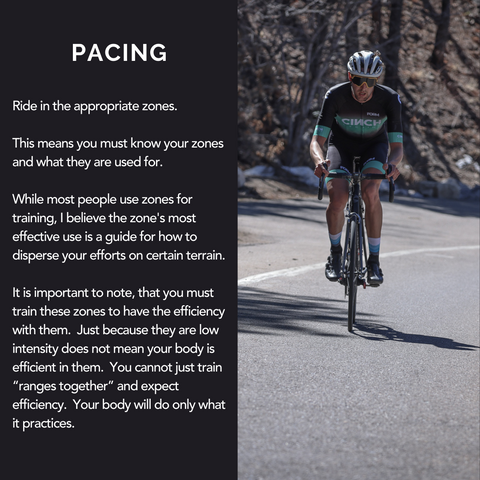
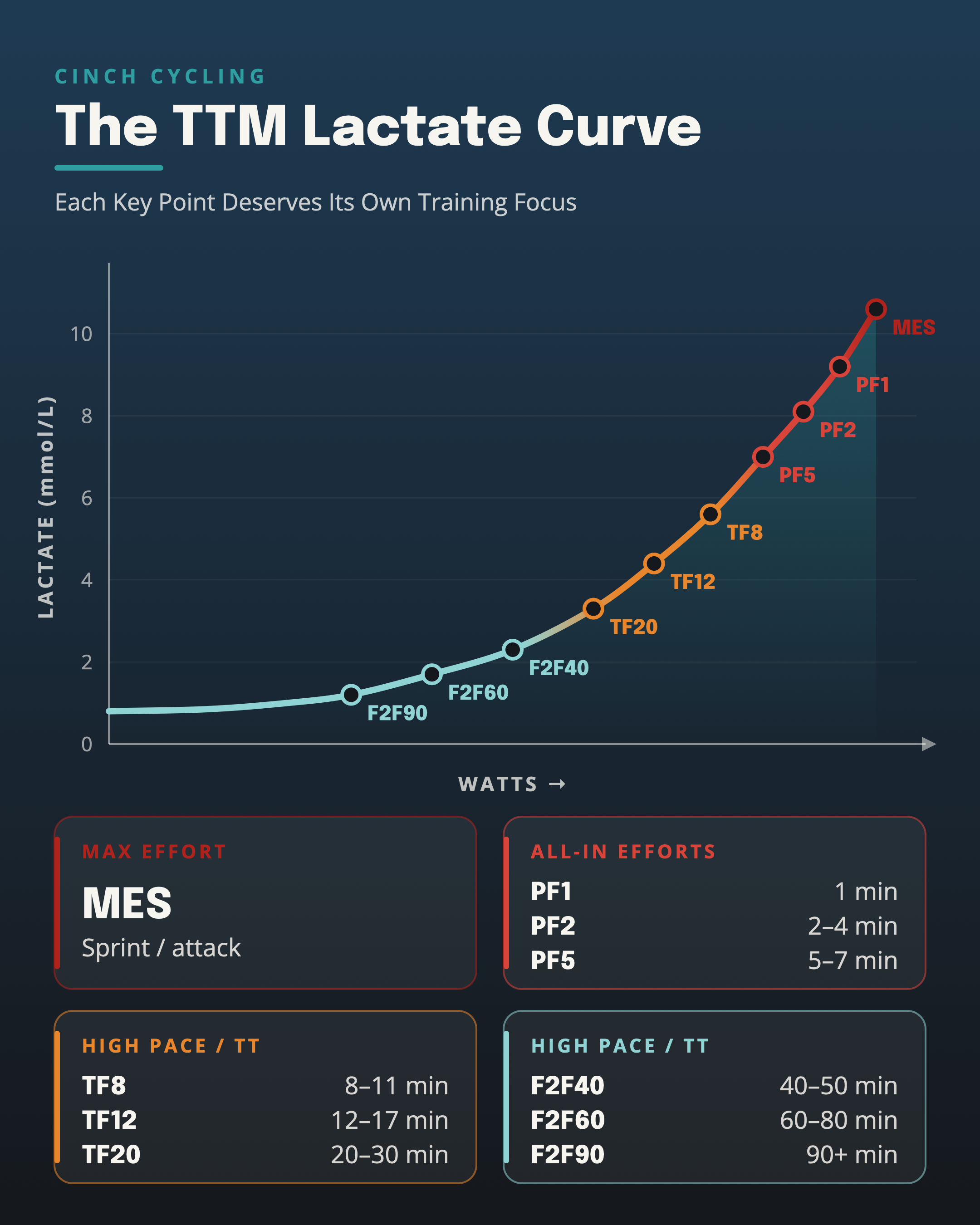
This means you must know your zones and what they are used for. While most people use zones for training, I believe the zone’s most effective use is a guide for how to disperse your efforts on certain terrain. It is important to note, that you must train these zones to have the efficiency with them. Just because they are low intensity does not mean your body is efficient in them. You cannot just train “ranges together” and expect efficiency. Your body can do only what it practices.
Alternating: Train changing between energy systems.
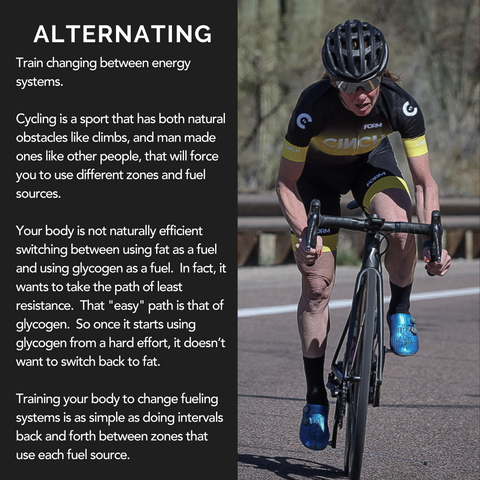
Cycling is a sport that has both natural obstacles like climbs, and man made ones like other people, that will force you to use different zones and fuel sources. Your body is not naturally efficient switching between using fat as a fuel and using glycogen as a fuel. In fact, it wants to take the path of least resistance. That easy path is that of glycogen. So once it starts using glycogen from a hard effort, it doesn’t want to switch back to fat. Training your body to change fueling systems is as simple as doing intervals back and forth between zones that use each fuel source.