CINCH CYCLING
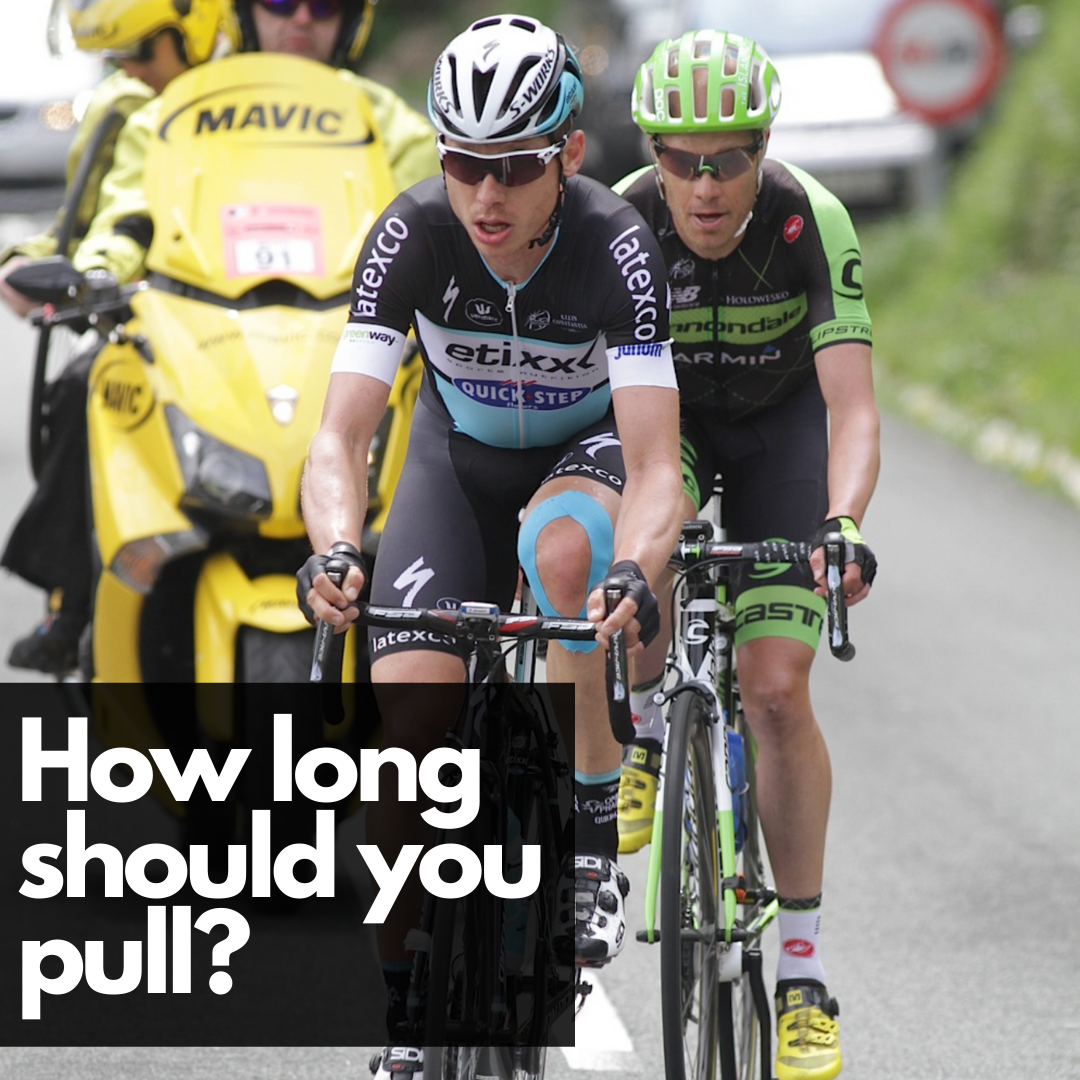
Two road cyclists ride close together on a paved road, the lead rider in a black and light blue Etixx Quick-Step kit with taped knee, the second tucked behind in green Cannondale. A yellow Mavic moto follows. Overlay text reads "How long should you pull?

Training Tips · Sun Jan 23, 2022

What Determines How Long You Should Pull For?

Wind direction decides how long to pull in a paceline or breakaway: take long pulls into a headwind and short, steady ones with a tailwind.

You are in a breakaway or a paceline, how long should you pull?

That is a good question and let’s keep the answer simple: look at where the wind is coming from to determine whether to take long or short pulls.

Yes, you need to learn to be a weatherman as a road cyclist. You should ALWAYS be looking for signs to help you determine where the wind is coming from. Look for flags and listen to the sound of your wheels. If you can hear strongly the sound of your wheels it’s a tailwind, if you cannot that means it’s a headwind.

When determining the length of your pulls in a paceline follow these guidelines:

Headwind: Long pulls.

The key to riding in a headwind is keeping the pace steady. Each time you change riders you drop the speed and then increase it. This is slower and harder on the group. Think of a head wind like a climb. Imagine short pulls on a climb? Speed would be low and the whole group would be pegged.
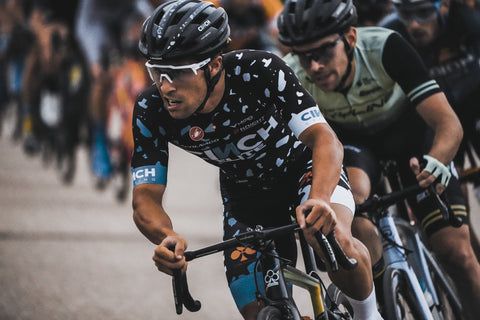
Two road cyclists in helmets and sunglasses ride hard at the front of a group, one in a black and blue spotted kit leaning over the handlebars with a focused look, another close behind in a light green jersey, with blurred riders behind.

Tailwind: Short but steady pulls.

The tailwind keeps the speed of the group up so a continuous rotation is better and smoother for the group. Avoids surges as well. Surges in a headwind are not so bad, but surges in a tailwind are death to your break or paceline companions.
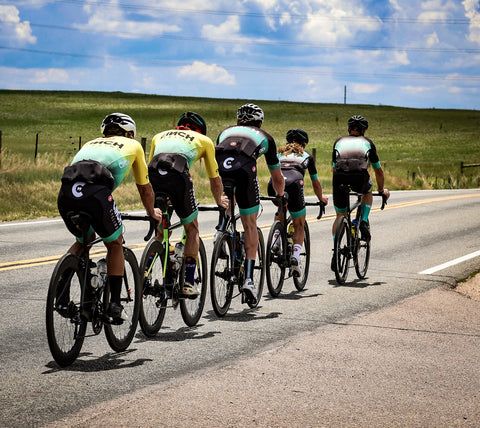
Five cyclists ride in a tight single-file paceline along a paved road, seen from behind, with grassy open plains and a blue sky with scattered clouds beyond. Their matching kits show a steady, organized rotation.

Give these tips a try on your next ride and go further, faster, and smoother!
Next step

Ride your next hundred with a plan.

Forty-five minutes with a Cinch coach about your riding. Nothing to pay.

Book a free consult
Questions about this one?Ask Tom and other riders in Cinch Community. Sign in or join free.
Discuss this article
Written byKourtney DanielsonKourtney co-founded Cinch with Tom and created the 3-Sigma Nutrition System, which teaches busy cyclists how to fuel for peak performance.All 281 articles by Kourtney

Keep reading