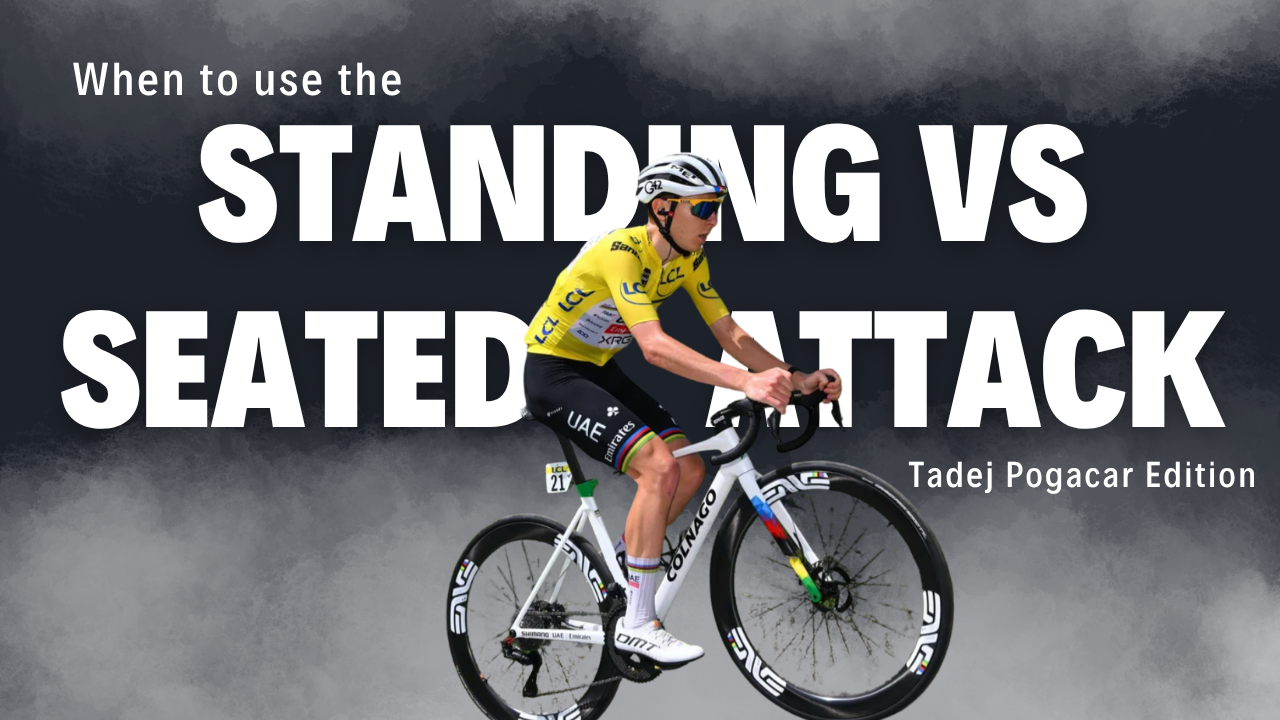

Is the seated attack better than the standing attack? Let’s use Tadej Pogacar, the best cyclist in the world as a case study to find out.
As a coach and ex–pro cyclist, I love following Tadej Pogačar’s racing. Sure, he wins a lot, but what’s even more interesting is how he keeps finding new ways to progress his performance.
Recently, he’s added a seated attack to his arsenal. But like the rest of us, he started first with the standing attack. So why evolve? And does he still use both?
Absolutely, just for different moments.
Let’s break it down:
The Standing Attack
- Duration: 15–30 seconds
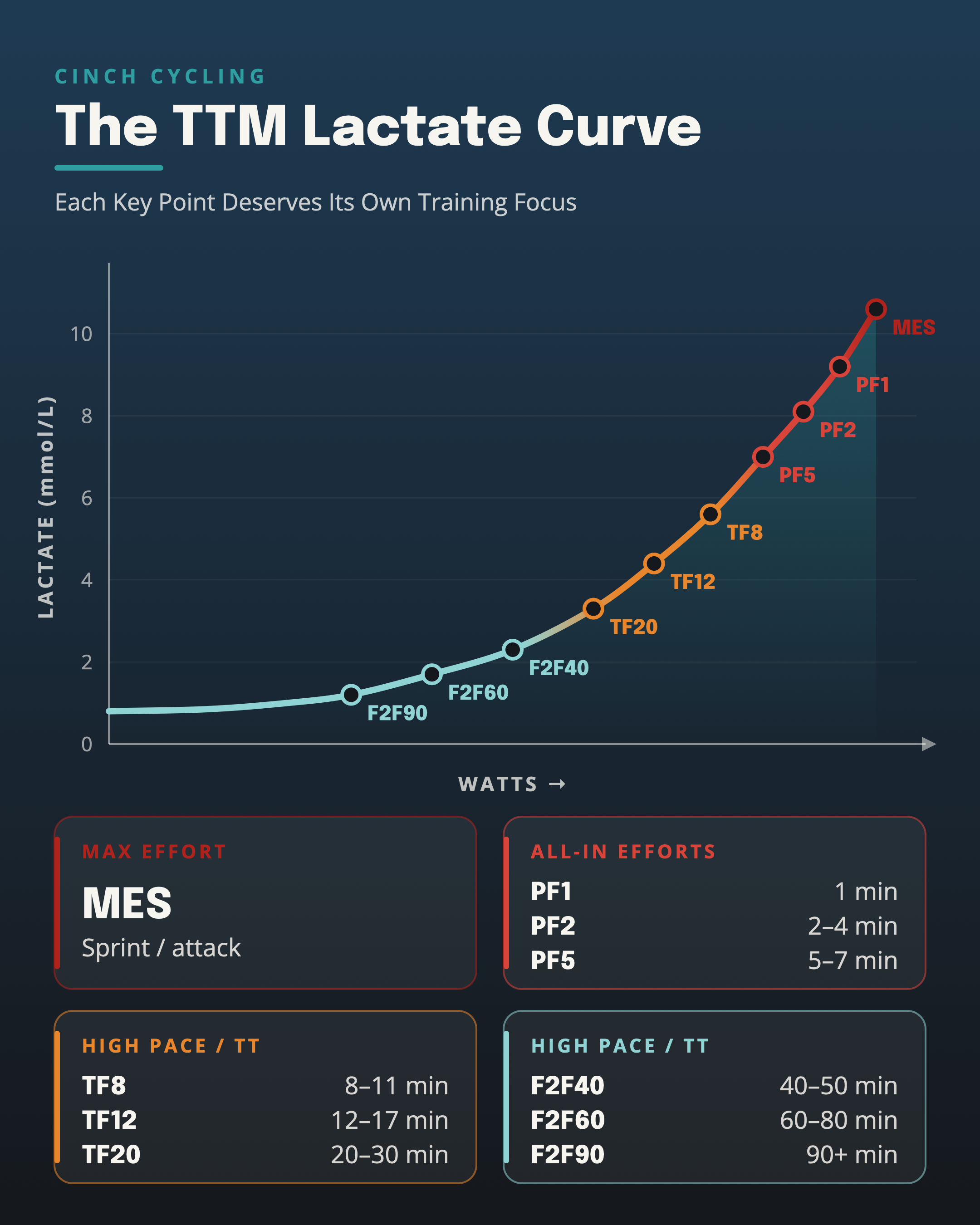
- Power: Just below an all-out sprint
- Purpose: To instantly create separation
- Tradeoff: It’s a baseball bat to your own legs, after that burst, you have to drop power well below threshold to recover.
It’s best used to test your competitors’ legs or to create that initial gap. But if the riders behind can hold threshold power similar to yours (or better), they can often close it back down when you recover. We’ve seen this in the battles between Tadej and Jonas where Jonas has evolved his standing top end power to be able to follow Tadej.
The Seated Attack
- Duration: 1–4 minutes
- Power: Starts just below standing attack, then holds well above threshold (up to +100W more than threshold)
- Purpose: Cook your competitors more gradually to the point of an absolute melt down.
This is where Tadej’s evolution shows. The seated attack doesn’t create a huge gap right away, instead, it slowly breaks the riders behind as they can’t sustain the same torque and rhythm.
By staying seated, the legs can sustain that high torque longer. And once the damage is done, the attacker can settle back to threshold and keep the separation growing.
Key Takeaways:
Standing attacks are for shock and testing.
Seated attacks are for pressure and separation.
Train both — and learn when to use each. That’s how you evolve your performance like Pogacar.
 Tadej Pogacar's Standing vs Seated AttackVideo · plays from YouTube