Standing can make you go faster with less effort. You can use standing to help with your accelerations as well as help you maintain speed in momentum sapping sections with less effort.
1. Accelerating with Standing Technique.
With a sharp transition from sitting to standing, you are able to create a snappy acceleration. This is done by aggressively adding your body weight into each pedal stroke while you lift yourself out of the saddle. The leverage that is created in the standing motion can sharply increase your total power output resulting in a boost of speed to accelerate. This is best used to go from a slower speed to a higher speed and done in shorter intervals such as 30 seconds.
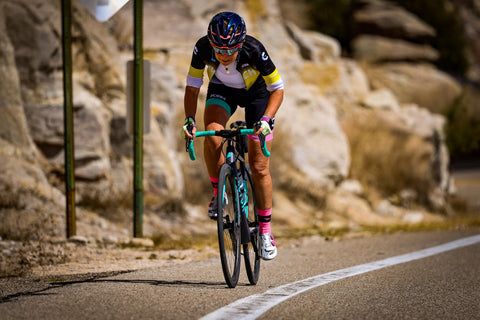
2. Maintaining Speed and Momentum with Standing Technique.
Standing can also help you save energy. This can be done to maintain your speed while reducing your effort. A situation this could be used in is when you enter the first part of a climb from a downhill or flats. Instead of adding physical effort to try and maintain your entrance speed, adding body weight will help you increase the power output without any energy. This standing technique is best used for longer intervals of one to three minutes.
With both standing techniques, body position is everything. Some advice to help you start to find these unique body positions is to first find the sweet spot where your triceps are balancing your body when you are out of the saddle. Then drop your body weight into each pedal stroke. This substitutes much of the pushing and pulling effort you are putting out by adding in your body weight into the pedal stroke.